Each answer below is written to stand on its own, so you can jump straight to the question you have. Where a topic needs more than a few sentences, the answer links to the page that covers it properly.
Getting a quote
What happens after I send my quote request?
A roofer who works in your part of Perth reviews the details, contacts you to talk through the job, arranges an inspection if it needs one and gives you a written quote. Our privacy notice explains how your details are used.
How is the price of roof work worked out?
The roofer prices the job after assessing it: the roof material, its condition, the size of the job, height, access and the work agreed all change the total. Our cost guides explain each factor, starting with roof repair costs.
Do I need to know my roof type before requesting a quote?
No. Choose “Not sure” in the quote form and the roofer will confirm it. Our guide to Perth roof types shows how to tell the common materials apart from the ground.
What details make a quote request more useful?
Your suburb and postcode, the roof material (or “not sure”), the number of storeys, what you have noticed and when, and how soon you need help. You do not need your full street address at first; the quote form walks you through each item.
Quotes and costs
What is the difference between a quote and an estimate?
A quote forms a binding contract when you accept it, while an estimate is an approximate cost that can change. Consumer Protection WA recommends getting written quotes rather than verbal ones; see comparing roofing quotes.
Should a roofing quote name the products to be used?
Yes. A clear quote names the roofing material or coating system, the colour and, where relevant, the number of coats and any primer or sealer, so you can check suitability and compare like with like. Ask for the product’s warranty conditions as well; see our quote comparison guide.
Why should I avoid an open-ended roofing contract?
Consumer Protection WA warns against accepting an open-ended contract, because its conditions can be altered without your agreement. Ask for a written quote with a defined scope and price, and a clear process for approving any extra work; see roofing contracts and your rights.
What are the red flags when choosing a roofer?
Consumer Protection WA lists requests for cash deposits, full payment before work begins and refusal to provide a written quote as red flags. For permit work valued at $20,000 or more, also confirm the roofer is a registered building contractor; see questions to ask a roofer.
Can I get a firm quote from photos alone?
Usually not. Photos help a contractor understand the job, but hidden damage, access and the condition of the roof normally need to be seen in person, so a price based on photos is best treated as an estimate. Ask whether it will be confirmed after an inspection; see roof repair costs.
Why is the roof area in my quote bigger than my floor area?
A pitched roof has more surface than the floor it covers, and the eaves add more. Use our roof area calculator to check the area a quote is based on.
Repairs and leaks
What should I do first when water comes through the ceiling?
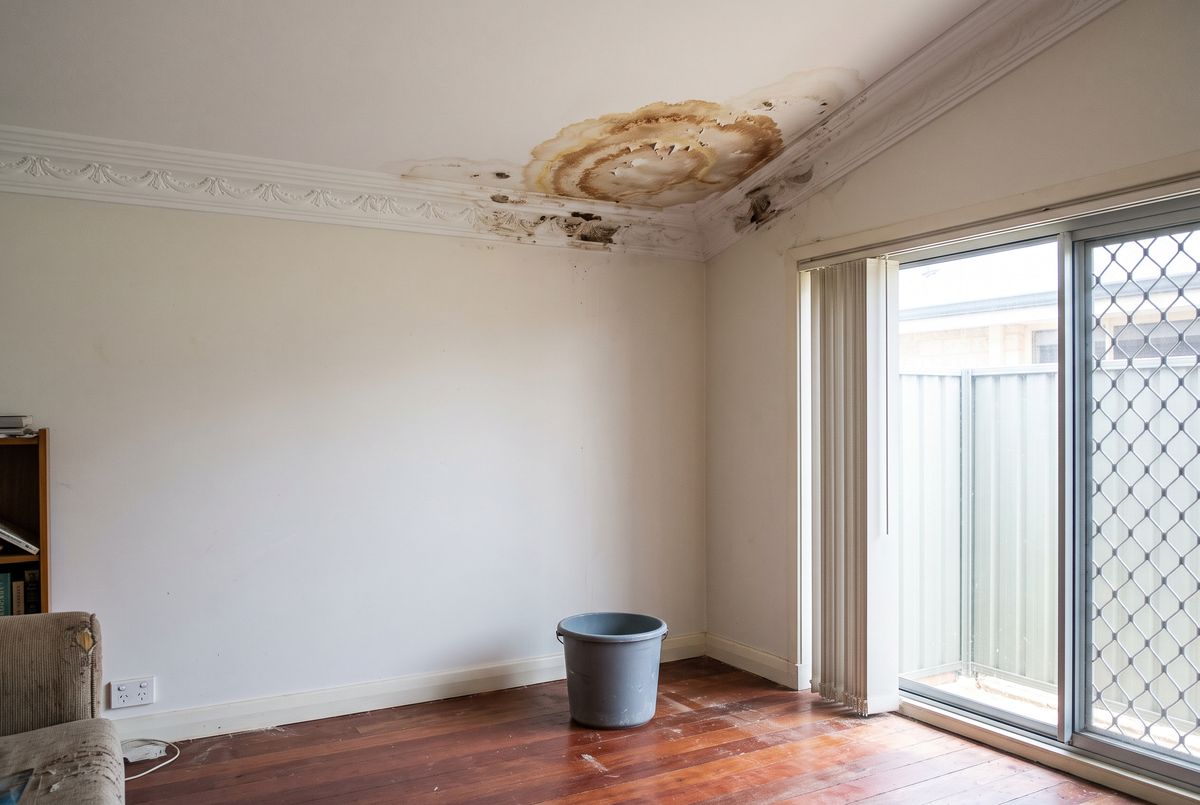
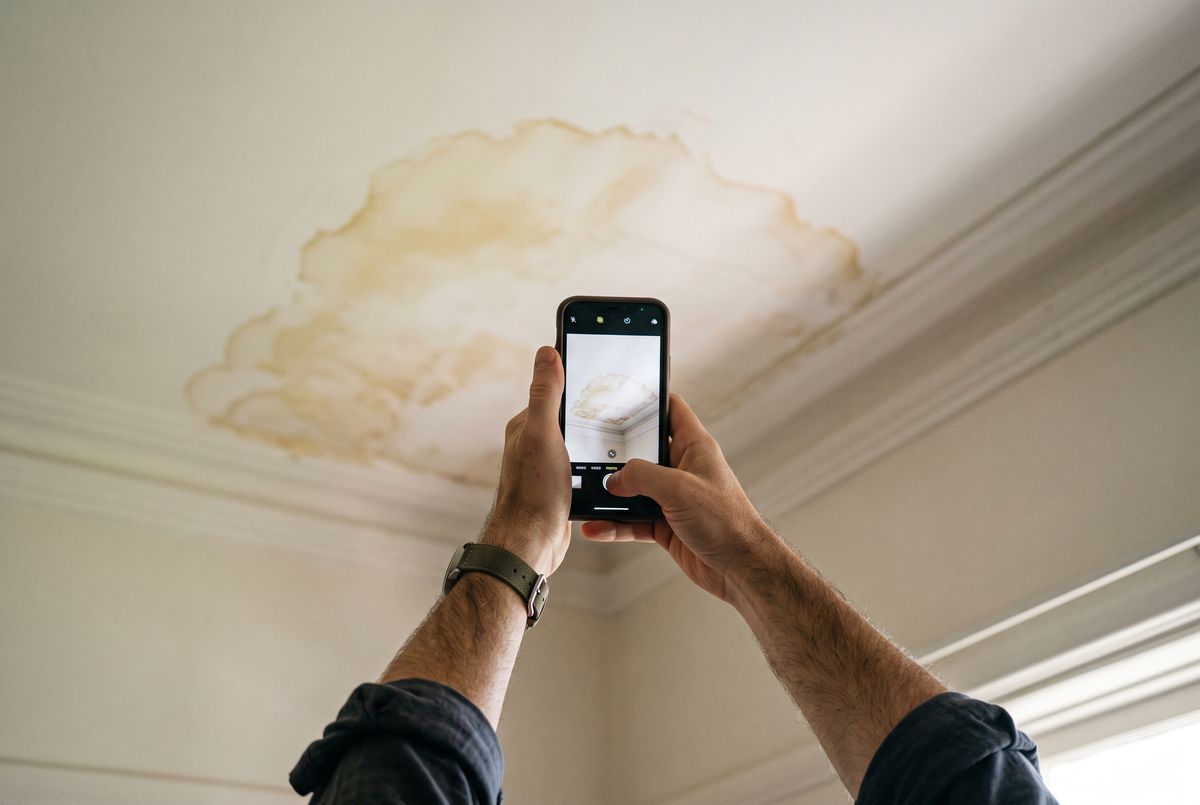
Move belongings, catch the drips with a bucket and keep people away from any sagging ceiling or wet light fittings. Photograph the stain and note the weather when it started; our guide to what to do when your roof leaks sets out the next steps.
Why do roof leaks often show up at the start of winter?
Most of Perth’s rain falls between May and September, and long, hot summers are hard on pointing, sealants and flashings. The first heavy rain after summer is often when those weaknesses show; see Perth weather and your roof.
How does a roofer find where a leak is coming from?
Water often travels along battens, sarking or framing before it drips, so the stain may be some distance from the entry point. A good inspection traces the path from inside and outside rather than assuming; our guide to finding the source of a roof leak explains the method.
What is the difference between repointing and rebedding?
Bedding is the sand-and-cement mortar under the ridge and hip caps, and pointing is the finish over it. Repointing renews the pointing only, while rebedding removes the caps and resets them in fresh bedding; see roof repointing.
Can blocked gutters cause water to come inside the house?
Yes. Gutters, downpipes and valleys that are blocked with leaves can overflow back under the roof covering or into the eaves, especially in heavy rain. See gutter repairs for when cleaning is enough and when parts need replacing.
What is a roof flashing, and why do flashings fail?
A flashing is a strip of metal or other material that seals a junction, such as where the roof meets a wall, chimney, skylight or vent. Flashings fail when sealant breaks down in the sun, the metal corrodes or the building moves and opens a gap; see roof flashing repairs.
Restoration and painting
What is the difference between roof restoration and roof painting?
Painting applies a coating system to a roof that is already sound. Restoration is a wider package that can include repairs, ridge work and cleaning before any coating; see roof restoration and roof painting.
Can any roof be painted?
No. Concrete tiles, unglazed terracotta and many steel roofs can be coated if the product is compatible and the preparation is right, but glazed terracotta is not normally painted, and asbestos cement roofs need specialist advice because they must never be pressure cleaned in WA. Read roof painting for what suits each material.
How do I know whether my roof needs restoring or replacing?
Restoration suits a roof whose covering is still structurally worth keeping; widespread breakage, rusted-through sheets or failing battens and fixings point towards replacement. Ask for the inspection findings that support each option, and see repair, restoration or replacement.
How long should a roof coating last?
It depends on the product, the preparation, the number of coats and how exposed the roof is to sun and salt, so there is no single figure. Ask for the product’s data sheet and the warranty terms in writing; see how long a roof restoration lasts.
What is the difference between a product warranty and a workmanship warranty?
A product warranty comes from the manufacturer and covers the coating or roofing material under its stated conditions, while a workmanship warranty comes from the contractor and covers how the work was done. Ask for both in writing and check what each requires of you; see roof painting.
Replacement and rules
When is replacing the roof better than repairing it?
Replacement is usually considered when tiles are breaking across the roof, steel sheets have rusted through, or battens and fixings are failing, so that repairs would keep chasing new problems. Ask the contractor to show the evidence; see roof replacement.
When does roof work need a building permit in WA?
Repairs that will not affect structural soundness are generally exempt, and replacing roof cladding with the same material and profile is unlikely to affect the structure. Changing the material or profile could, for example where lighter steel needs extra tie-downs, and the local government decides case by case; see building permits for roof work.
Should sarking be added when a roof is replaced?
It is worth asking about. Sarking is a membrane beneath the roof covering that helps manage water and heat, and many older Perth tile roofs have none, so a reroof is the practical time to consider it. Ask the contractor to price it as a separate line; see sarking and roof insulation.
Do heritage or bushfire rules affect roof work?
They can. A heritage-listed home or one in a heritage area may need planning approval before its roof material or form changes, and a roof replacement in a bushfire prone area may raise Bushfire Attack Level questions. Ask your local government first; our service area pages and bushfire and your roof guide cover the detail.
Who do I contact if I have a dispute about roof work?
Talk to the contractor first and put your concerns in writing. Consumer Protection WA handles Australian Consumer Law issues, and Building and Energy handles building, registration and building-contract matters; see roofing contracts and your rights.
Safety and asbestos
How should my household stay safe while roof work is under way?
Keep children, pets and visitors away from the work area and the ground below the roof edge, where tools, tiles or debris can fall, and follow any exclusion zone the contractor sets. Never climb up to check progress; ask the contractor for photos instead. Our guide to roof safety for homeowners explains why.
Why can't an asbestos cement roof be pressure cleaned?
High-pressure water cleaning of asbestos cement roofs is prohibited in WA because it breaks down the sheet surface and spreads asbestos-contaminated residue, including onto neighbouring properties. The clean-up must be done by a licensed removalist and can be very expensive; see asbestos roof replacement.
What should I avoid doing to a roof that might be asbestos?
Do not drill, cut, sand, walk on or pressure clean it. Homes built before about 1990 may contain asbestos cement, and only testing by a qualified person confirms it; see our asbestos roofs guide.
Will a roofer stop work in wet or windy weather?
Often, yes. Wet, windy or very hot conditions make roof surfaces more dangerous and can affect coatings and sealants, and contractors must manage fall risks under WA work health and safety laws. Ask how weather delays are handled and how the roof will be kept weathertight in the meantime; see questions to ask a roofer.