A leak usually shows up at the worst time: overnight, mid-storm, or in Perth with the first cold front after a long dry summer. The priority is to keep people safe and limit the damage inside. Finding and fixing the cause comes after the weather clears.
This page covers the first hour, the next day and the conversation with a contractor. For working out where the water is getting in, see finding the source of a roof leak.
What should you do first when the roof starts leaking?#
Start with electrical safety, then contain the water and protect your belongings. Work through these in order:
- Check for water near electrics. If water is dripping near light fittings, ceiling fans, power points or the switchboard, keep clear and do not touch them. If you can reach the main switch without standing in water, switching off is a sensible precaution. Building and Energy WA advises not turning power or appliances back on until a licensed electrician has checked them, and DIY electrical work is illegal.
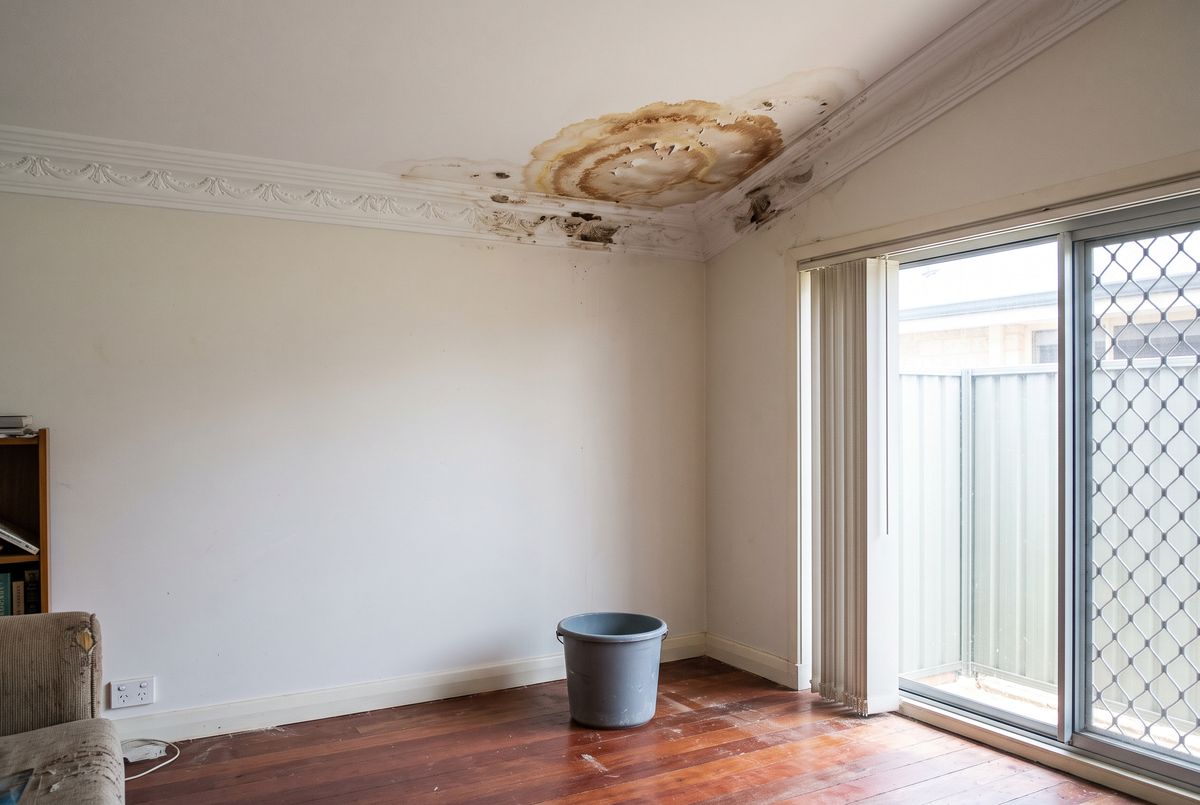
- Catch the water. Put buckets, bins or containers under each drip. A towel or rag in the bottom of a bucket reduces splashing, and towels on the floor around it protect timber and carpet.
- Move and protect belongings. Shift furniture, rugs, electronics and documents out of the way. Cover anything you cannot move with plastic sheeting or a tarp.
- Watch the ceiling. If the plaster is sagging, bulging or cracking, it may be holding water and could come down. Keep everyone, including pets, out of that room and do not stand underneath it.
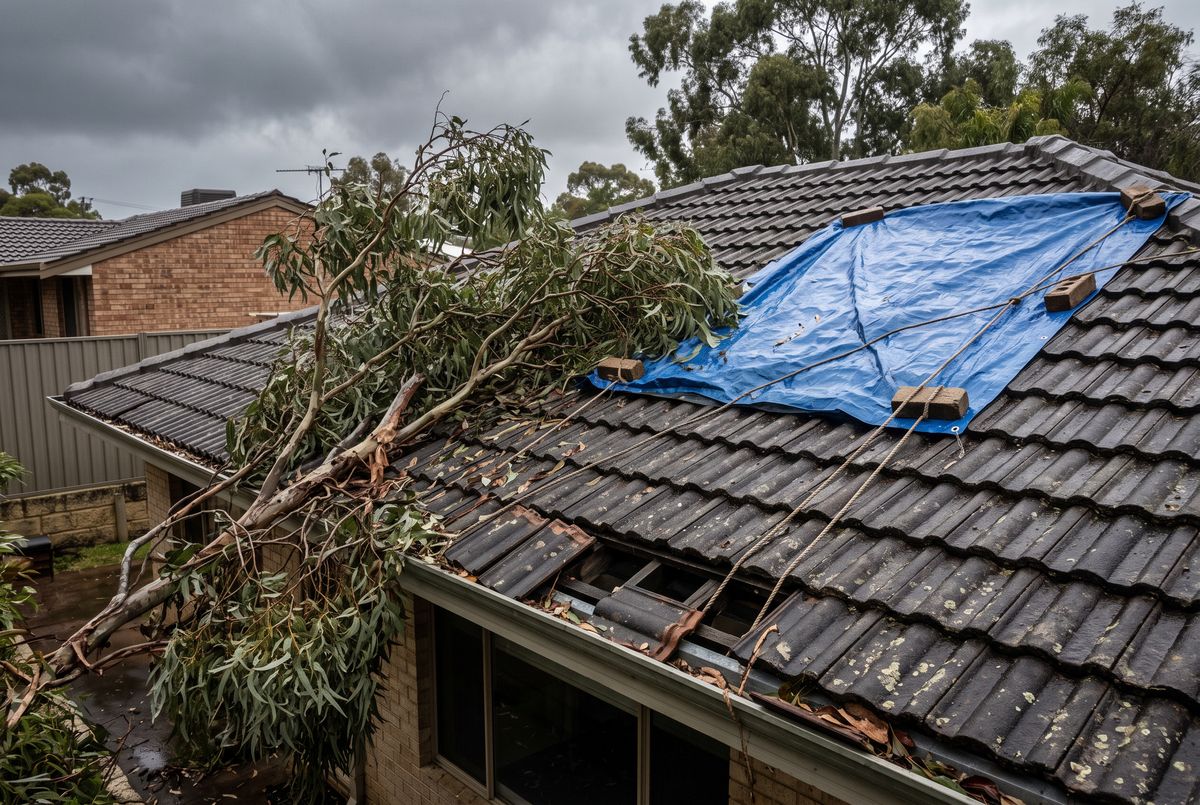
- Stay off the roof. Do not climb up to look, clear gutters or lay a tarp, during the storm or after it.
- Call for help if you need it. Triple Zero (000) for life-threatening emergencies, the SES on 132 500 for storm damage you cannot make safe, and Western Power on 13 13 51 for fallen or damaged powerlines.
Never go onto the roof or up a ladder during rain, wind or darkness. Wet tiles and steel are extremely slippery, and gusts can knock you off balance. If you see a damaged powerline, Western Power advises staying at least 8 metres away.
When should you call the SES or Triple Zero?#
Call Triple Zero (000) if anyone is injured or in danger, for example if a ceiling has collapsed onto someone or water is entering live electrical equipment and someone has had a shock. For storm damage you cannot make safe yourself, such as a badly damaged roof or a collapsed ceiling, call the SES on 132 500.
The SES makes temporary emergency repairs, such as covering a damaged section; it does not arrange permanent repairs. DFES notes that calls are prioritised to those most in need, so help may take hours or even days during a big storm. For a slow drip that buckets can handle, start with your insurer and a roofing contractor instead.
How do you document the damage?#
Record the damage before you clean up, because your insurer and contractor will both want to see it. The Insurance Council of Australia advises taking photos or videos of damage to the property and belongings before cleaning up, and not throwing away goods that could be salvaged or repaired.
- Photos and video of the ceiling, walls and floor, including close-ups of stains and drips.
- Photos of damaged belongings before you move them, plus a written list.
- Photos of the outside of the roof from the ground, if it is safe to go outside.
- The date and time the leak started and what the weather was doing.
- Receipts for anything you buy to protect the house, such as tarps or buckets.
Should you contact your insurer straight away?#
Yes, if you think you may claim. DFES advises contacting your insurer as soon as you can to report damage; the insurer may send an assessor. DFES also advises checking with your insurer before entering a contract with repair contractors, and the Insurance Council suggests speaking to your insurer before authorising any building work, including emergency repairs.
Policies differ. ASIC notes that damage from wear and tear, or from a failure to keep the property in good condition, is generally excluded, because home insurance is designed for unforeseeable events such as storms. Check your policy wording, and see our guide to roof insurance claims for how claims usually work.
What if you rent, or live in a strata property?#
Tenants should tell the landlord or property manager as soon as possible, in writing if they can. Consumer Protection WA lists a roof leak or possible ceiling collapse as an urgent repair, which the landlord has 48 hours to organise with a suitable repairer. If the ceiling collapses, tell the landlord or agent straight away.
In a strata complex, the roof is often common property, so contact the strata manager or council of owners. Our page for strata and property managers explains what helps them organise a repair.
What is the difference between a temporary and a permanent fix?#
A temporary fix stops water coming in for now; a permanent fix removes the cause. Both have a place, but they are different jobs.
Temporary measures include a tarp over a damaged section, sliding a displaced tile back into place, or sealant over a crack or a failed joint. These are done by the SES or a contractor, never by a homeowner on the roof. They can buy time, but they are not a substitute for a proper repair.
A permanent repair starts with finding where water gets in, which is often some distance from where it drips. It might mean replacing tiles, rebedding a ridge, fixing a flashing or replacing a rusted valley. Ask any contractor to separate the make-safe work from the permanent repair in writing, so you can see what each costs. See roof leak repair and storm damage roof repairs.
What should you tell a roofing contractor?#
The more specific your description, the quicker a contractor can find the cause. Include:
- Where the water appears inside, with photos.
- When it started, and whether it leaks in all rain or only heavy rain or strong wind.
- The wind direction during the storm, if you noticed.
- Your roof material and whether the house is single or two storey.
- Any recent work on the roof, such as solar panels, an antenna or an air conditioner.
- Previous leak repairs and where they were.
- Whether an insurance claim is open, and the claim number.
- Access details, such as side gates, pets and parking.
You can send these details with a roof quote request. If you are unsure whether the job is a repair or something bigger, see repair, restoration or replacement.
Frequently asked questions
Should I go up on the roof to put a tarp over the leak?
No. Wet roofs are slippery, storms bring gusts, and falls cause serious injuries. Contain the water inside and call the SES on 132 500 or a roofing contractor to make the roof safe.
Can I use the lights in a room with a leaking ceiling?
Not if water is near the light fittings, fans or switches. Keep clear, switch off at the main switch if you can do so without standing in water, and have a licensed electrician check before using them again.
Will the SES fix my roof?
The SES can make temporary emergency repairs to storm-damaged roofs it is called to, but it does not organise permanent repairs. Calls are prioritised by need, so contact your insurer and a contractor for the lasting fix.
Should I make a hole in a bulging ceiling to let the water out?
We do not suggest it. A ceiling holding water is heavy and can collapse without warning, and wet plaster near light fittings is an electrical risk. Keep people out of the room and call the SES on 132 500 if it may collapse.
Should I call a roofer or my insurer first?
If you might make a claim, call your insurer first or at the same time. Insurers may arrange an emergency make safe themselves, and the Insurance Council of Australia suggests speaking to your insurer before authorising any building work, including emergency repairs.
Sources
- DFES: during a storm
- DFES: recovering from a storm
- Building and Energy WA: electrical and gas safety after Cyclone Zelia
- Western Power: keeping your vegetation clear (damaged powerlines)
- Insurance Council of Australia: questions after a disaster
- ASIC: review of home insurance claims (REP 768)
- Consumer Protection WA: rental home repairs