Asbestos cement sheeting was a common roofing material on Perth homes for decades, and many of those roofs are still in place. WA Health says asbestos was included in many common products used in homes built before 1990, and that all asbestos structures are now ageing and reaching the end of their useful life.
An asbestos roof is not an emergency simply because it exists. The risk comes from disturbing it: cleaning it the wrong way, walking on it, cutting into it, or letting storm or fire damage break it up. This guide covers how to recognise one, what the WA rules say and how homeowners usually decide between monitoring it and replacing it.
Do not disturb a suspected asbestos roof. Do not walk on, drill, cut, sand or pressure clean it, and do not break off a piece to test. WA Health warns that walking on asbestos cement roofs is a serious fall risk because aged sheeting is brittle. Leave sampling to an appropriately qualified person.
How can you tell if a roof might be asbestos cement?#
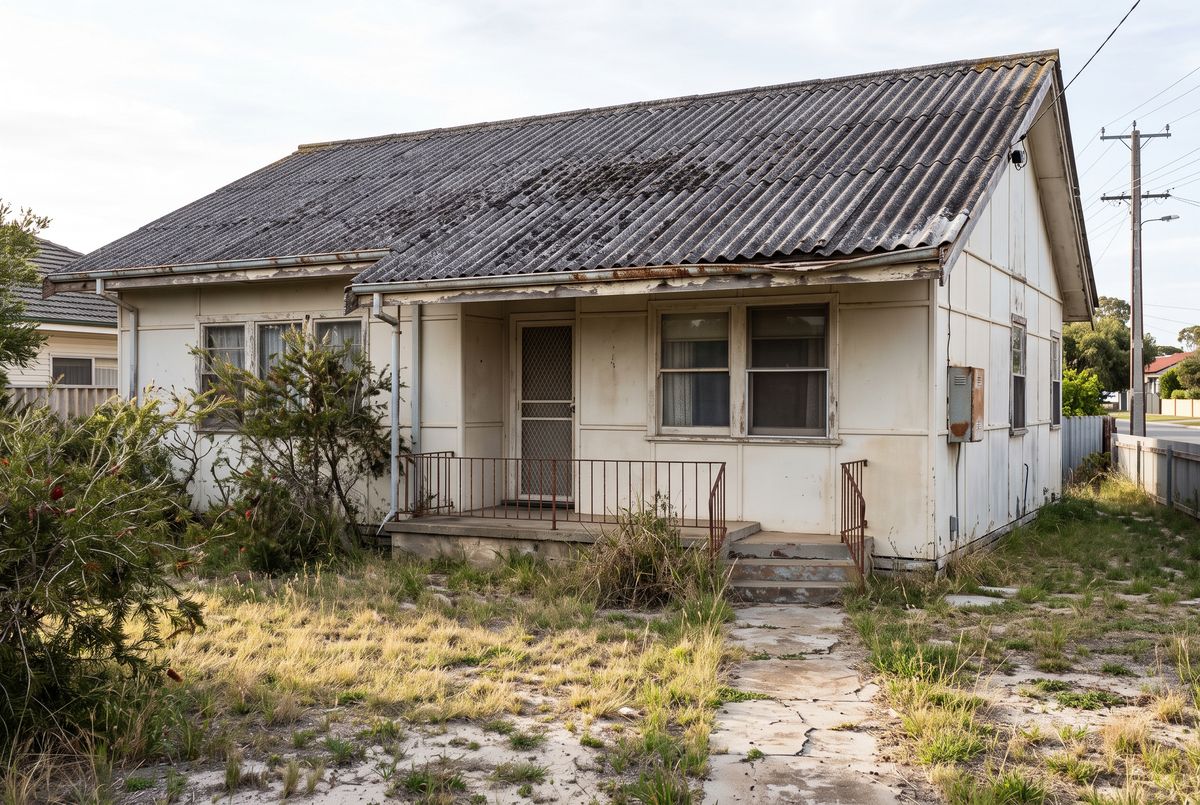
You cannot confirm it by looking; only testing by an appropriately qualified person confirms asbestos. A few clues make it more likely and are worth mentioning when you enquire.
| Clue | What it suggests | Why it is not proof |
|---|---|---|
| The home was built before about 1990 | Asbestos cement products were in common use | Many homes of that age have tile or steel roofs |
| Grey, fibrous-looking sheets rather than tiles | Fibre cement sheeting, which older sheets often were | Asbestos-free fibre cement can look the same |
| Wide corrugated or ribbed sheets with a thick, rounded profile | A profile often seen on older cement sheet roofs | Steel and newer sheeting can have similar shapes |
| A weathered, pitted or lichen-covered surface | An aged cement-based sheet | Other materials weather too |
| Sheets have been painted at some point | A common way older sheet roofs were maintained | Paint hides the material underneath |
If you are buying, renovating or getting quotes, ask whether the roof has been tested and request a copy of any result. Our guide to Perth roof types shows how asbestos cement compares with the tile and steel roofs that most Perth homes have.
Why is an asbestos roof a risk?#
The risk comes from fibres released when the material is damaged or disturbed. WA Health describes the risk of asbestos-related disease from exposure to asbestos products in the community as very low, but says extra precautions are needed when fibres may be released. WorkSafe puts it more bluntly: there is no safe level of exposure to asbestos.
Age makes disturbance more likely. WA Health notes that asbestos roofs can be very brittle and degraded after years of sun, wind, rain and hail, and that improper cleaning and maintenance can increase exposure to airborne fibres. WorkSafe also lists asbestos and other fibre cement sheets among fragile roof materials that people have fallen through.
Why is pressure cleaning an asbestos roof prohibited?#
High-pressure water cleaning of asbestos cement roofs is prohibited in WA under the Health (Asbestos) Regulations 1992, and also under workplace safety laws. It breaks down the sheet surface and spreads asbestos-contaminated residue across the property and often onto neighbouring properties.
The consequences are serious. Contaminated residue must be cleaned up by a licensed removalist, and WA Health says these clean-ups can be very expensive and can involve multiple properties. It also notes that these incidents are usually caused by ill-informed property owners or roof painting contractors. If you are getting roof cleaning or roof painting quotes for an older home, confirm what the roof is made of first.
Can you repair or paint an asbestos roof?#
Only within narrow limits. WA Health says conducting anything beyond minor repairs is a breach of the Health (Asbestos) Regulations 1992. It also says that only where an asbestos structure has been kept well maintained and sealed or painted can it be safely maintained, for example cleaned and resealed, without releasing fibres.
For most ageing roofs, the department’s position is clear: it encourages early and safe removal of asbestos cement roofs, and says complete removal is strongly preferred over maintenance and repair of ageing asbestos structures.
Who is allowed to remove an asbestos roof?#
A licensed asbestos removalist, in almost every case. WorkSafe WA allows a homeowner to remove less than 10 m² of non-friable (bonded) asbestos themselves by following strict safety steps, but strongly recommends using a licensed removalist for any removal. A whole roof is far larger than that.
| Situation | Who can do it |
|---|---|
| Less than 10 m² of non-friable asbestos | The homeowner, following strict safety steps (a licensed removalist is strongly recommended) |
| More than 10 m² of non-friable asbestos | A licensed removalist with a Class B or Class A licence |
| Any amount of friable asbestos | A licensed removalist with a Class A licence |
You can check a removalist’s licence using WorkSafe’s online licence and registration search. Our asbestos roof replacement page explains how removal and the new roof are usually quoted together.
How must asbestos waste be disposed of?#
Asbestos waste cannot go in household bins. It must be wrapped, labelled and taken to a facility licensed to accept it. A licensed removalist normally handles disposal as part of the job, so ask for disposal to be listed in the quote and keep any disposal receipts.
Should you leave it or replace it?#
Homeowners usually weigh two options, and the right one depends on the roof’s condition, your plans for the house and your budget.
| Option | What it involves | Things to weigh |
|---|---|---|
| Leave it undisturbed and monitor | No cleaning, walking or drilling; watch for damage from the ground | The roof keeps ageing; storms or fire can break it up and cause contamination; future work on the house becomes harder |
| Remove and replace | Licensed removal, then a new tile or steel roof | A building permit is likely if the material changes; the frame and tie-downs may need checking |
WA Health’s view is that it is safer, and usually much less expensive, to remove and replace asbestos roofs while they are still relatively intact, rather than after storm, fire or cleaning damage has spread contamination. If you are planning roof replacement, our guide to building permits for roof work explains why changing material usually needs a permit.
If you decide to monitor for now, look from the ground after storms and strong winds for cracked or broken sheets, loose sections or debris. If a storm breaks sheets, keep people and pets away from the debris and do not clean it up yourself. For storm damage you cannot make safe, call the SES on 132 500, and contact your local government, whose environmental health officers are the first contact for asbestos concerns in the community.
What if you are buying a house with an asbestos roof?#
Treat it as a planning item rather than a reason to panic. Ask the building inspector to note the roof material and condition, and ask whether any testing has been done. Before your inspection condition deadline, you can get a replacement quote so you know what you are taking on. Our guide to roof issues in building inspection reports explains how to use that evidence when negotiating.
Frequently asked questions
Is it safe to live in a house with an asbestos roof?
WA Health describes the risk from asbestos products in the community as very low, with extra precautions needed when fibres may be released. The main concern is disturbance, so do not walk on, clean, drill or cut the roof, and watch for damage.
Can I paint an asbestos roof myself?
It is not advisable. Pressure cleaning to prepare it is prohibited, anything beyond minor repairs breaches the Health (Asbestos) Regulations 1992, and WA Health says only a roof that has been well maintained and sealed can be safely maintained without releasing fibres.
How do I find a licensed asbestos removalist in WA?
Use WorkSafe WA’s online licence and registration search to confirm that a removalist holds the correct licence. Removing more than 10 m² of non-friable asbestos, or any friable asbestos, must be done by a licensed removalist.
Can I put broken asbestos roof sheets in my bin?
No. Asbestos waste cannot go in household bins; it must be wrapped, labelled and taken to a facility licensed to accept it. Licensed removalists usually arrange disposal as part of the job.
What should I do if a storm breaks my asbestos roof?
Keep people and pets away from broken sheets and debris, and do not clean up or break the material further. Call the SES on 132 500 if you need emergency help making the house safe, contact your insurer, and ask your local government for advice on clean-up.