A flashing is a piece of metal or flexible material that covers a joint the roof covering cannot seal by itself: where a roof meets a wall, where a chimney or vent pipe passes through, around a skylight and along exposed edges. Flashings work by lapping, so water runs over them and away from the joint, the way overlapping tiles or sheets shed rain.
They are a leading cause of roof leaks for a few reasons. They sit where water is concentrated against a vertical surface. They join materials that move differently in heat, such as steel against brick. And many are finished with sealant that ages in Perth’s strong summer sun. Flashing faults also tend to leak only in certain wind directions, which makes them hard to pin down. See roof leak repairs for how leaks are traced.
Where are the flashings on a roof?#
| Flashing | Where it is | Typical failure |
|---|---|---|
| Apron flashing | Along the top of a lower roof where it meets a wall, such as a verandah or extension against the house | Lifted, too short, or sealant cracked where it meets the wall |
| Step or side flashing | Along the sloping side of a roof where it runs beside a wall | Gaps where the flashing steps up the brick courses; mortar joints eroded |
| Counter or cover flashing | Set into or fixed to the wall, lapping over the apron or side flashing | Pulled out of the mortar joint, or sealant failed |
| Chimney flashing | Around the base of a chimney, often with a back flashing on the uphill side | Back flashing blocked with debris; mortar around the chimney cracked |
| Skylight flashing | Around the skylight upstand | Kit poorly fitted, laps reversed, sealant failure |
| Pipe and penetration flashings | Around vent pipes, flues, aerial masts, solar conduits and air-conditioning lines | Rubber collars perished in the sun, or screws through the sheet unsealed |
| Barge flashing | Along the gable edge of a metal roof, covering the ends of the sheets | Loose fixings, wind lifting the edge |
Valleys, where two roof slopes meet, are a related weak point covered on the valley repairs page. The roof glossary defines the terms used on quotes.
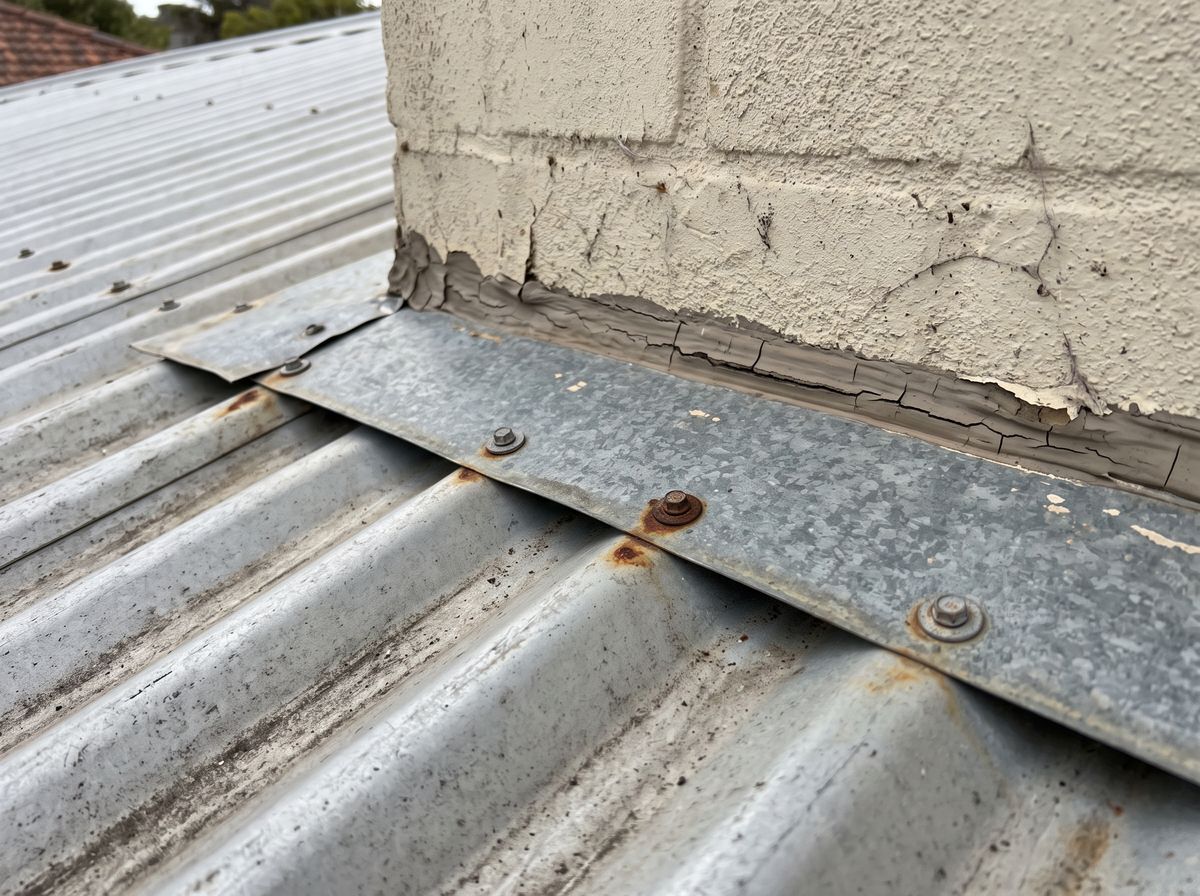
Signs a flashing may be failing#
Several of these can be seen from the ground or a window. Others show up inside.
- Ceiling stains near an external wall, a chimney breast or a skylight.
- Damp patches on the inside face of a wall that sits under a verandah or extension roof.
- Cracked, peeling or missing sealant along a flashing edge.
- A flashing that has lifted, bent or pulled away from the wall.
- Rust streaks on or below a flashing.
- Leaks that appear only in wind-driven rain from one direction.
- New leaks after solar panels, an aerial or air conditioning were installed.
Lead, aluminium and steel: which flashings are compatible?#
Flashing material has to suit the roof, because some metals corrode others by contact or when water runs off one onto the other.
| Material | Where it is used | Compatibility notes |
|---|---|---|
| Lead | Older tile roofs and chimneys, because it is easy to shape | Lysaght lists lead as not compatible with ZINCALUME steel or pre-painted steel such as COLORBOND steel, by contact or runoff |
| Aluminium | Penetration flashings, formed flashings | Lysaght lists aluminium as compatible with ZINCALUME and COLORBOND steel |
| Pre-painted or coated steel | Most flashings on steel roofs, colour matched to the roof | Matches the roof material when the same coating is used |
| Copper | Some older or heritage details | Not compatible with ZINCALUME and COLORBOND steel |
| Rubber or EPDM collars | Pipe and conduit penetrations | Common for round penetrations; the rubber ages in sunlight over time |
BlueScope’s tables also warn that some flexible flashings and washers contain carbon black, which is not suitable in contact with these steels, so ask for products made for coated steel. Where old lead flashings are built into a brick wall or chimney and will stay during a reroof to steel, ask how the contractor will stop the lead touching or draining onto the new roof. The metal roof repairs page covers compatibility across the rest of a steel roof.
Why is silicone not a substitute for a flashing?#
Sealant has a place, for example at the top edge of a cover flashing or where two flashing pieces lap. Problems start when sealant is asked to do the flashing’s job: a bead of silicone across a gap the flashing should cover, or a lifted flashing glued back down instead of being refixed.
Lysaght notes that most sealants are not adhesive, so the steel still needs proper fixing, and that only neutral-cure silicone made for coated steel should be used on steel roofs. Sealant applied over dust, rust or old sealant also bonds poorly. If a quote describes a flashing repair as “reseal”, ask whether the flashing itself will be refitted or replaced, or whether it is a sealant-only fix.
Chimneys and skylights#
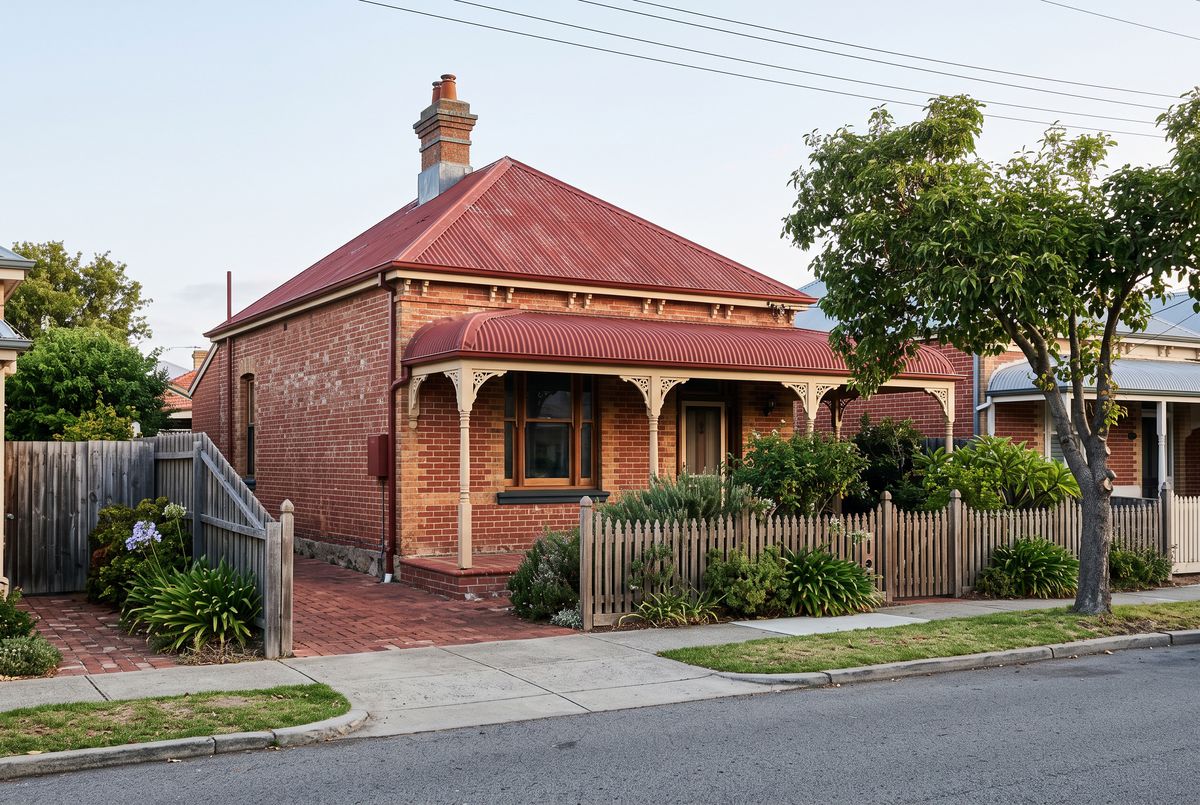
Brick chimneys are common on older homes in Perth’s inner suburbs. Water can get in through the flashing at the roof line, but also through cracked mortar joints, a porous brick face or an open or cracked chimney top. A good inspection should distinguish between a flashing leak and water coming through the chimney itself. See roofing in Perth’s inner suburbs for more on older housing stock.
Skylights can leak from the flashing, from the skylight unit’s own seals, or from condensation forming inside the shaft on cold nights. The fix differs for each, so ask which one the contractor believes is responsible and why.
Vent pipes, solar conduits and other penetrations#
Every hole through the roof needs its own flashing. Rubber collars around vent pipes and flues age in the sun and can split. Penetrations added later, such as aerial brackets, solar conduits and air-conditioning lines, are sometimes sealed quickly with sealant rather than flashed. If a leak appeared after new equipment was installed, raise it with that installer as well. In WA, only licensed electricians may do the electrical work on solar systems, so any repair that disturbs solar cabling needs an electrician involved.
What should a flashing repair quote clarify?#
- Which flashing is at fault and the evidence, ideally with photos.
- Repair method: refix, replace, or reseal, and why.
- Material and colour of new flashings, and their compatibility with the roof.
- Wall work: whether mortar joints or render around the flashing are repaired.
- Related items such as chimney mortar or skylight seals that are excluded.
What is usually included, and what is not?#
| Usually included | Often extra or excluded | Worth asking about |
|---|---|---|
| Removing the failed flashing | Chimney rebuilding or repointing | Whether the chimney itself is sound |
| New flashing in a compatible material | Skylight unit repairs | Who is responsible for the skylight |
| Refixing into the wall or roof | Render or paint repairs to walls | Colour of new flashing |
| Neutral-cure sealant where specified | Electrical work around solar cabling | How the repair will be tested |
What affects the price of flashing repairs?#
- Type and length of flashing: a vent collar is a small job, a long apron flashing on a two-storey wall is not.
- Access and height, including scaffolding against walls.
- Wall construction: cutting into brick, render or cladding to set a cover flashing.
- Custom folding for unusual shapes or colours.
- Related repairs to chimneys, skylights or nearby tiles and sheets.
Roof repair costs in Perth explains how small repair jobs such as flashings are usually priced.
Questions to ask the contractor#
- Which flashing is leaking, and how did you confirm it?
- Will you replace the flashing, refit it or only reseal it?
- Is the new flashing material compatible with my roof?
- Are there old lead or copper details that will drain onto my roof?
- Could the water be coming through the wall or chimney instead?
- What sealant will you use, and is it neutral-cure?
Frequently asked questions
What is the difference between an apron flashing and a step flashing?
An apron flashing runs along the top edge of a roof where it meets a wall, such as a verandah roof against the house. A step or side flashing runs up the sloping side of a roof beside a wall, stepping with the brick courses.
Can old lead flashings stay when a roof is replaced with steel?
Lead is not compatible with ZINCALUME or COLORBOND steel, by contact or runoff. If lead built into a wall is to stay, ask the contractor how it will be isolated from the new roof, or whether it should be replaced with a compatible material.
Why does my chimney only leak in some storms?
Wind-driven rain from one direction can push water past a worn flashing or into cracked mortar on the exposed face of the chimney. Recording the wind direction when it leaks helps the contractor find the weak point.
Do skylight leaks always come from the flashing?
No. The water may come through the skylight’s own seals, or from condensation forming inside the shaft on cold nights. The repair is different for each, so ask which cause the contractor has identified.
Who should repair a leak around a solar or air-conditioning penetration?
Contact the installer first, especially if the work is recent. A roofer can repair the flashing, but any work that disturbs solar wiring needs a licensed electrician.