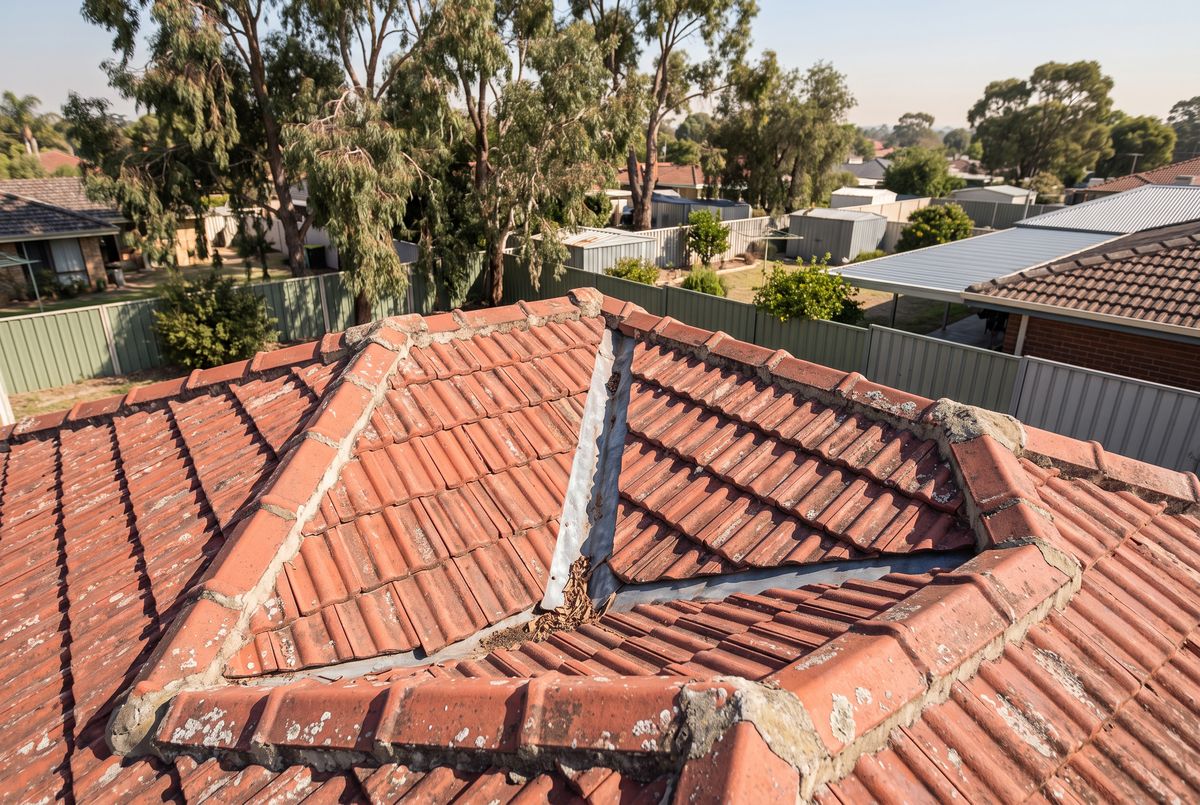
Most tiled roofs in Perth are concrete or terracotta. Tiles are laid in overlapping rows hooked over timber or steel battens, so each tile relies on the ones around it to shed water. One cracked or slipped tile can let rain straight through, and on the many older Perth roofs with no sarking underneath, that water lands on top of the ceiling.
A tile repair is a targeted job: find the damaged tiles, replace or reset them, and check what caused the damage. It is not the same as a roof restoration, which bundles repairs with cleaning and coating, although tile repairs are often part of one.
Signs you may need tile repairs#
Many of these can be spotted from the ground, from a neighbour’s upstairs window or after rain inside the house.
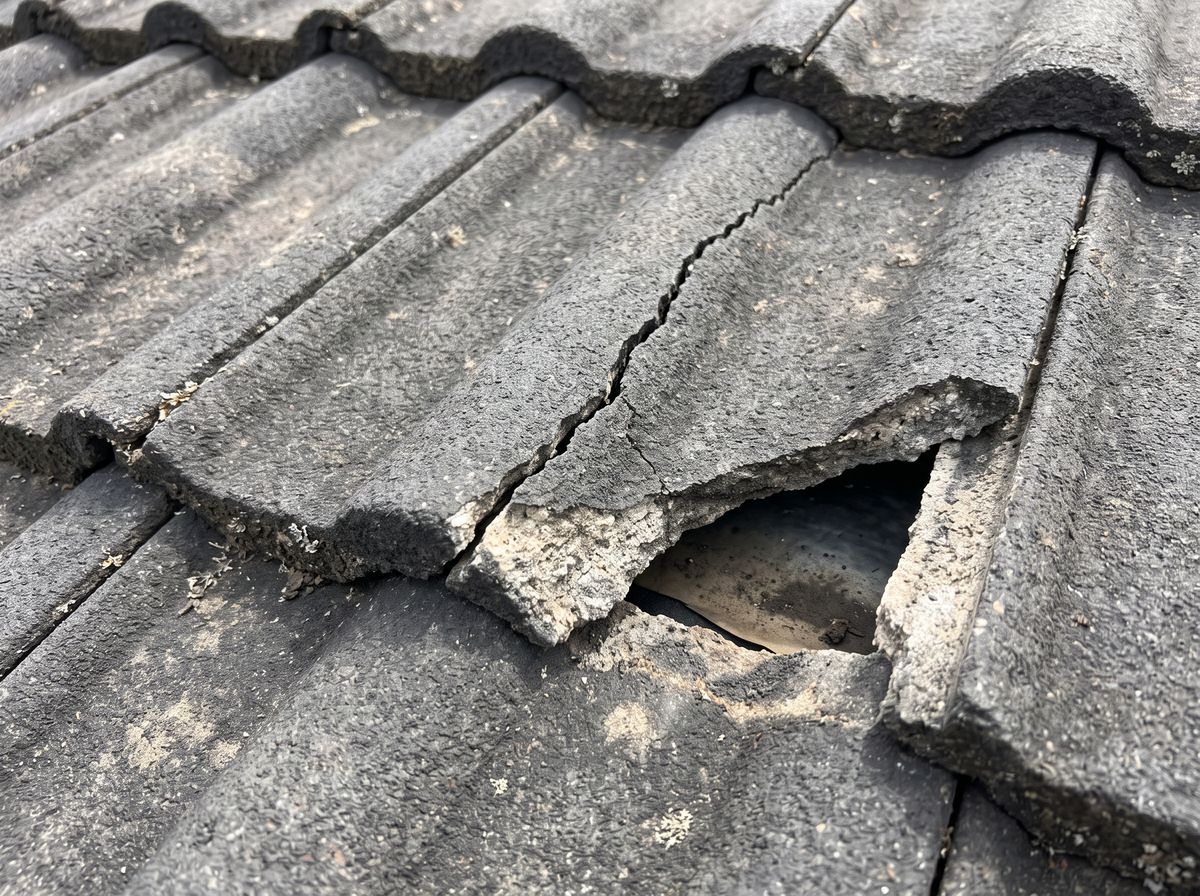
- A visible crack, broken corner or missing piece in a tile.
- A tile sitting out of line with its row, or a gap where one has slipped down.
- Tile fragments in the gutters, on paths or in garden beds.
- A ceiling stain that appeared after someone worked on the roof.
- Damage after a storm or a fallen branch.
- A building inspection report noting cracked or displaced tiles.
What causes roof tiles to crack or slip?#
Knowing the cause matters, because replacing a tile without addressing why it broke can mean the same repair next winter. Common causes include:
- Foot traffic. Tiles are made to shed water, not to carry a person’s weight in the wrong spot. Solar installers, aerial and air-conditioning technicians, painters and gutter cleaners can all crack tiles.
- Impact. Falling branches, debris in storms and objects thrown or dropped onto the roof.
- Age and weathering. Concrete tiles lose their surface over time and older terracotta can become brittle, so tiles crack more easily when handled.
- Movement. Loose battens, missing clips or nails, or shifting roof framing can let tiles slide or rock.
- Earlier repairs. Tiles that were not seated properly, or replacements of a slightly different size, can sit proud and catch the wind.
The guide to cracked and broken roof tiles explains how to tell a hairline crack from a structural problem.
Walking on a tile roof is a common cause of the damage this page describes, and falls from roofs cause serious injuries. Do not climb up to check tiles yourself. See roof safety for homeowners.
Can replacement tiles be matched to an older roof?#
Often, but not always perfectly. A replacement tile must match the profile (the shape and interlock), the dimensions and ideally the colour of the tiles around it. Profiles change and manufacturers discontinue ranges, so on older roofs the exact tile may no longer be made.
| Option | What it involves | Watch for |
|---|---|---|
| New tiles in the same profile | Current production of the same or a compatible profile | New tiles are usually brighter and cleaner than weathered ones |
| Second-hand tiles | Salvaged tiles from demolitions or a supplier’s stock | Condition varies; hidden cracks; colour may differ between batches |
| Moving tiles within your roof | Taking tiles from a hidden area, such as behind solar panels or a rear slope, and putting new or second-hand tiles there instead | More labour, but the visible slopes stay consistent |
| Coating after repairs | Making mismatched tiles uniform with a roof coating | Only suitable for compatible tiles; adds scope and cost |
Colour difference is normal. Concrete tiles weather and fade, and terracotta varies naturally from batch to batch, so even a correct tile can stand out for some time. If appearance matters, ask the contractor which option they propose and where any mismatched tiles will go. Coating is covered on our roof painting page.
How do concrete and terracotta tile repairs differ?#
The basic job is the same, but the materials behave differently. The concrete versus terracotta tiles guide covers the materials in more detail.
| Concrete tiles | Terracotta tiles | |
|---|---|---|
| Material | Cement and sand, coloured at the surface or through the body | Fired clay, unglazed or glazed |
| Typical wear | Surface erosion, fading, lichen, porous tops | Brittleness with age, chipping, glaze crazing on some tiles |
| Matching | Many profiles have been made; colour often differs after weathering | Natural colour variation; older profiles can be hard to find |
| Handling | Heavier; can crack if walked on carelessly | Older tiles can snap when lifted or walked on |
| Coating | Commonly coated during a restoration | Unglazed may be coated with a compatible product; glazed normally not painted |
What about ridge capping on a tile roof?#
Cracked tiles and ridge problems are often found together. Ridge and hip caps sit on a bed of mortar and are sealed with pointing; when the pointing cracks or the bedding fails, caps can loosen and let water in along the ridge. A tile repair quote should say whether ridge work is included. See roof repointing for how ridges are rebedded and repointed.
Solar panels and tile damage#
Installing solar panels means walking on the roof and fixing brackets under or through the tiles, so cracked tiles are a known risk. Damage may not show until the next heavy rain, by which point the connection with the install is easy to miss. Taking photos of the roof from the ground before an install, and checking the ceiling after the first rain, gives you something to compare against.
Tiles under or right beside panels can be hard to reach. In WA, solar installers must be licensed electrical contractors and only licensed electricians may do the electrical work, so if panels need to be moved, ask who will disconnect and reinstall them. Our guide on roof work and solar panels explains the sequence.
What should a tile repair quote clarify?#
- How many tiles are being replaced, and whether there is an allowance for more found during the job.
- Where the tiles come from: new, second-hand or moved from elsewhere on your roof.
- The cause of the damage, if known, and whether it is being fixed too (for example a loose batten).
- Ridge work, if any, and whether it is repointing or rebedding.
- What happens to spare tiles after the job.
- Photos of the damaged and repaired areas.
What is usually included, and what is not?#
| Usually included | Often extra or excluded | Worth asking about |
|---|---|---|
| Replacing a stated number of tiles | Tiles beyond the allowance | The rate for each extra tile |
| Resetting slipped tiles | Batten or framing repairs | Whether battens were checked |
| Sourcing a close-match tile | Coating to blend colour | Where mismatched tiles will be placed |
| Clean-up of broken pieces | Ridge rebedding | Whether spares will be left with you |
What affects the price of tile roof repairs?#
- Number and location of tiles. A few tiles near the gutter is quicker than tiles scattered across a steep upper slope.
- Tile availability. Discontinued profiles may require second-hand sourcing or moving tiles around the roof.
- Height, pitch and access. Steep or two-storey roofs take longer to work on safely, and need more fall protection.
- Related defects. Ridge work, slipped battens or a valley problem found at the same time.
- Obstructions. Solar panels, air-conditioning units and aerials over the damaged area.
For more on how repair quotes are structured, see roof repair costs in Perth.
Questions to ask the contractor#
- What do you think caused the tiles to break?
- Is my tile profile still made, and how close will the colour be?
- If you find more damaged tiles, how will that be priced and approved?
- Will you check the battens and fixings around the repair?
- How will you avoid cracking other tiles while working?
- Can you leave me some spare tiles for future repairs?
When are repairs no longer enough?#
Replacing a few tiles makes sense when the rest of the roof is sound. If an inspection finds tiles cracking across many slopes, tiles that break when handled, or sagging lines that suggest failing battens, a repair may only buy a short time. Ask for the findings in writing and compare the options in our repair, restoration or replacement guide.
Frequently asked questions
Can one cracked tile cause a leak?
Yes. A single crack can let water through, especially on roofs without sarking, where water drops straight onto the ceiling. Even a hairline crack can widen, so it is worth having it assessed before the wetter months.
What if my roof tile profile is no longer made?
Contractors can often source second-hand tiles in the same profile, or move tiles from a hidden part of your roof to the damaged area and fill the hidden gap with the closest available match.
Why do new replacement tiles look a different colour?
Existing tiles have weathered and faded, while new tiles have not. Terracotta also varies naturally between batches. The difference usually softens as the new tiles weather, and some owners choose a coating to make the roof uniform.
Should I keep spare roof tiles?
It helps. Spare tiles in your exact profile and colour make future repairs quicker and closer in appearance. Keep them somewhere they will not be knocked, stepped on or thrown out by mistake.
Who fixes tiles cracked during a solar panel installation?
Raise it with the solar installer first, ideally with photos and the date the leak appeared. Whether they are responsible depends on the evidence and their terms, so keep your installation paperwork.