Going up for a quick look feels harmless, especially when a tile has slipped or a gutter is overflowing. Trained roofers treat it very differently: they use harnesses, edge protection, roof ladders and planned access, because even routine roof work is dangerous.
WorkSafe WA reported three fatal incidents in 2024 involving workers falling through fragile roof materials or roof openings. One was a worker cleaning gutters and roof tiles at a house who fell through the roof sheet of a patio. If trained workers face that risk, a homeowner with a borrowed ladder faces more.
Stay off the roof. Do not climb onto the roof, step from a ladder onto it, or walk on a patio, carport or verandah roof. Check what you can from the ground, from inside the house or from a safe window, and leave roof access to a contractor equipped to do it safely.
Why shouldn’t homeowners get on the roof?#
Because a roof combines a fall hazard with surfaces that can break, slide or carry electricity. The main risks are:
- Falls from the edge. A pitched roof slopes towards the edge, and a stumble near the gutter line can become a fall to the ground, onto paving or onto a fence.
- Fragile materials. WorkSafe lists acrylic, polycarbonate and other plastic sheets, glass, asbestos and other fibre cement sheets, corroded metal sheets and skylights among roof materials that may not bear a person’s weight. Dirt can make plastic sheeting hard to spot.
- Tiles that break underfoot. Concrete and terracotta tiles can crack when walked on, which can create the very leak you went up to find. See our guide to cracked and broken tiles.
- Slippery surfaces. WorkSafe notes that sheet profiles, debris, moisture and obstructions make stumbles more likely. Dust, lichen and morning dew all reduce grip.
- Asbestos cement. WA Health warns that walking on asbestos cement roofs is a serious fall risk because aged sheeting is brittle, and walking on it can also damage the sheets.
- Electricity. Building and Energy says turning off the main switch does not turn off the supply from the street, so overhead service lines stay live. Solar cabling from the panels to the inverter is also live whenever the panels are generating.
- Heat and sun. In a Perth summer, roof surfaces get very hot, which adds fatigue and the risk of burns or dehydration to everything else.
What can you check safely from the ground?#
A surprising amount. Stand back far enough to see the whole roof, use your phone’s zoom or a pair of binoculars, and walk around each side of the house.
- Missing, slipped or broken tiles, and gaps in rows.
- Ridge and hip lines that are no longer straight, or caps that look displaced.
- Rust streaks, lifted sheets or loose screws on a metal roof.
- Gutters overflowing in rain, sagging, or with plants growing in them.
- Downpipes that are disconnected or not discharging water.
- Flashings that look lifted where the roof meets a wall or chimney.
- Branches touching or overhanging the roof.
- Heavy lichen or moss, which can hold moisture against tiles.
Our signs your roof needs attention guide explains what each of these may mean, and the roof maintenance checklist suggests when to look.
What can you check from inside the house?#
Ceilings and walls often show a problem before it is visible outside. Look for water stains, bubbling paint, mould, damp smells and drips after rain, and note which room and how soon after rain they appear. That information helps a roofer find the source; see finding the source of a roof leak.
The roof space has its own hazards: live cables, foil insulation that may have become energised through poor installation, and ceilings that will not hold your weight between the joists. Under WA’s Work Health and Safety Regulations, the mains power must be off before any worker enters the roof space of a house. If you choose to look in yourself, Building and Energy advises switching off the mains at the switchboard, using a lock-out kit, telling someone where you are, using a torch and not touching any wiring. Looking from the hatch is far safer than crawling in.
Is it ever OK to use a ladder?#
For most homeowners, leaving ladder work to a professional is the safer choice. If you do use one, limit it to looking into a single-storey gutter from the ladder, never climbing higher or onto the roof.
- Use a ladder in good condition, on firm, level ground, and have someone hold it.
- Keep well away from overhead power lines, including the service line to the house.
- Keep three points of contact and do not overreach; move the ladder instead.
- Do not use a ladder in wind, rain, on a hot afternoon or when you are alone.
- Never step from the ladder onto the roof, a patio roof or a gutter.
What must roofing contractors manage under WA safety law?#
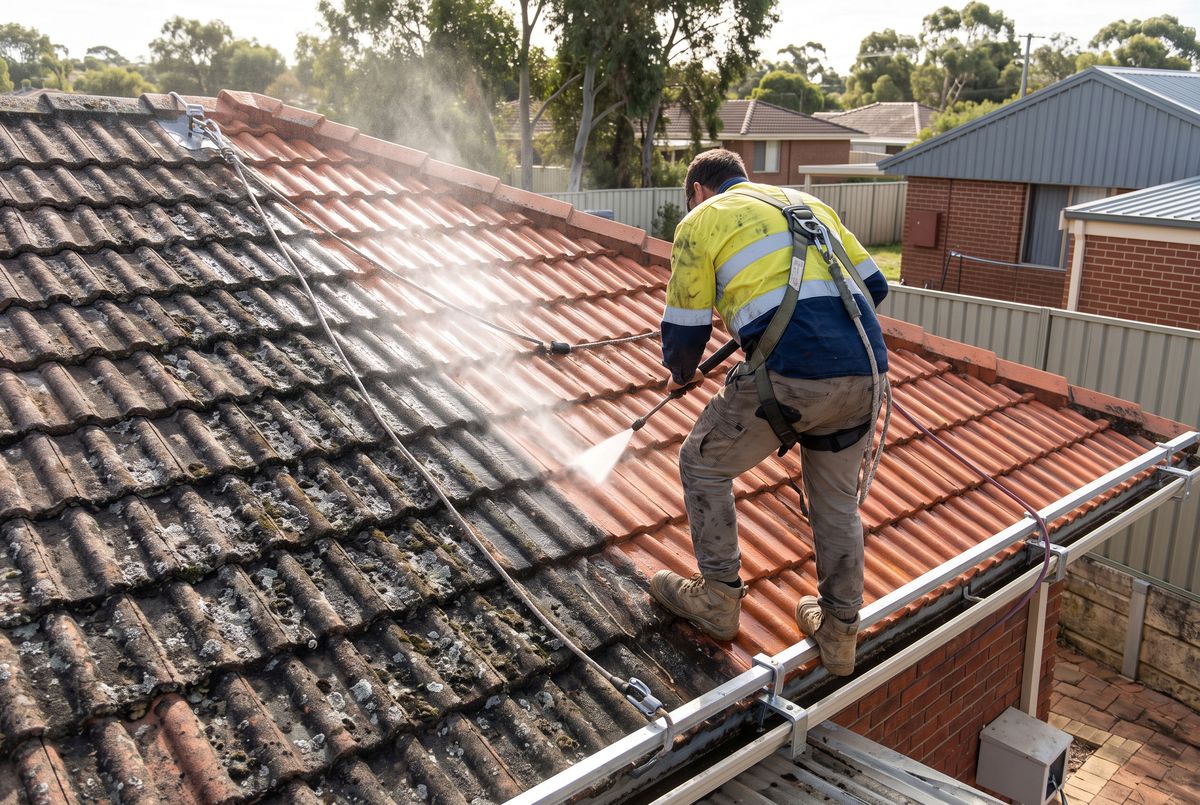
The business doing the work must manage the risk of falls under the Work Health and Safety Act 2020 and its regulations. WorkSafe WA’s guidance for roof work in housing construction says work where a person could fall 2 metres or more is high-risk construction work, and a safe work method statement (SWMS) must be prepared before it starts, setting out the fall hazards, the controls and how they will be monitored.
Where there is a risk of falling 3 metres or more, or the roof slope is over 26 degrees, the guidance says a fall prevention device such as edge protection must be in place, or if that is not reasonably practicable, a work positioning system or then a fall arrest system. Administrative controls such as training and procedures are not permitted on their own at that height. For fragile roofs, WorkSafe also lists measures such as safety mesh, crawling boards, roof ladders and elevating work platforms.
What should you ask a contractor about safety?#
Ask before the quote is accepted, so the safety method is part of the price rather than an afterthought.
- How will people get onto and move around the roof?
- What fall protection will you use: scaffolding, edge protection, harnesses and anchors?
- Will you prepare a safe work method statement for this job?
- Will the solar system be shut down before anyone goes on the roof?
- Have you identified any fragile areas, such as skylights, patio sheets or suspected asbestos?
- How will you keep my family, neighbours and passers-by clear of the work area?
Our guide to questions to ask a roofer covers the other questions worth asking before you sign.
How do you keep your household safe during roof work?#
Keep children and pets away from the work area and the ground below the roof edge, where tools, tiles and debris can fall. Move cars from driveways the crew will use, keep side gates clear for access, and agree on which doors and paths are safe to use. If you want to see progress, ask the contractor for photos rather than going up to look.
Frequently asked questions
Can I clean my own gutters from a ladder?
It is safer to use a professional, particularly on a two-storey house, near power lines or above paving. If you do, stay on the ladder, keep three points of contact, have someone hold it and never step onto the roof.
Is it safe to walk on a metal roof?
Not for homeowners. Metal sheets can be slippery, especially when dusty or damp, and corroded sheets are listed by WorkSafe as fragile. Contractors walk on metal roofs with planned fall protection.
Should I get on the roof to find a leak?
No. Note where water appears inside, when it happens and in what weather, and photograph the ceiling. A roofer can use that information to find the source safely.
Who is responsible for safety when a roofer works on my house?
The business carrying out the work is responsible for managing the risk of falls and other hazards for its workers under WA work health and safety law. You can help by providing safe access and keeping your household clear.
Is it safe to go into my roof space?
It carries real risks, including live wiring, energised foil insulation and ceilings that will not hold your weight. If you look in, switch off the mains, use a torch, stay on the joists and do not touch any wiring, or leave it to a professional.