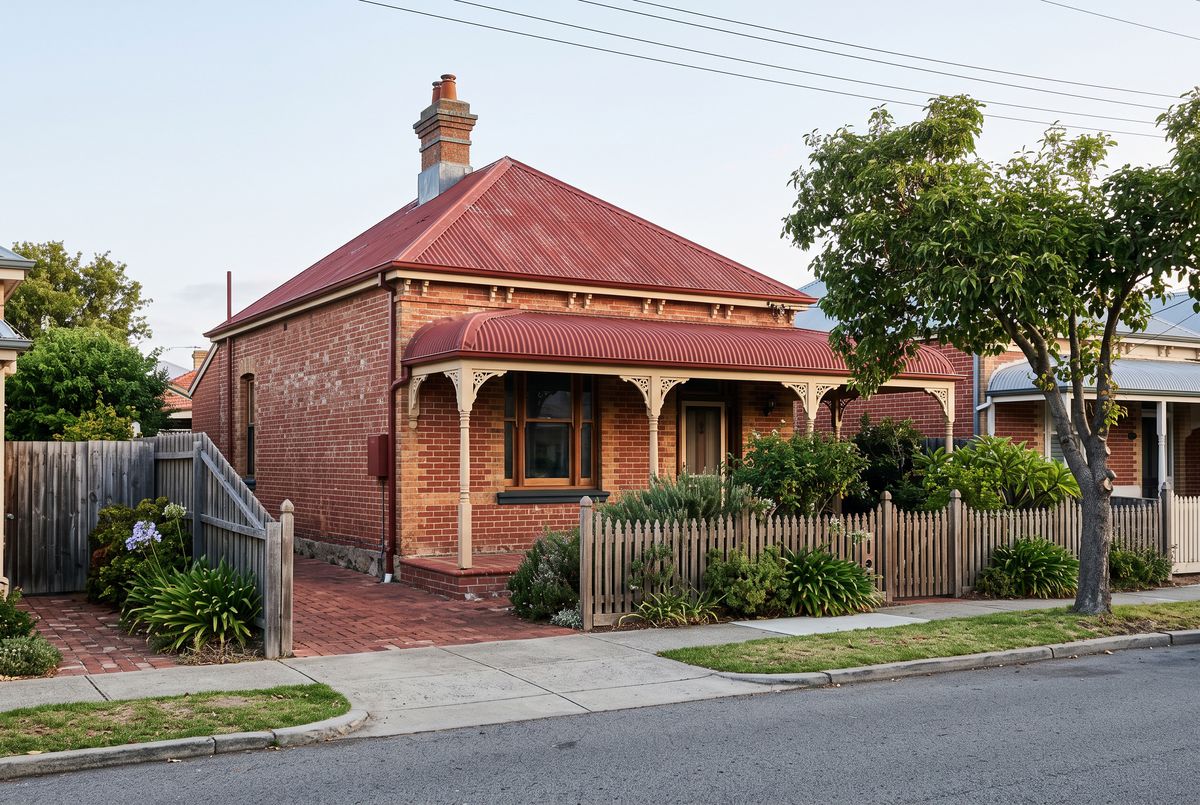
The inner suburbs ring the city centre: Mount Lawley, Highgate, North Perth, Leederville and Mount Hawthorn in the City of Vincent, East and West Perth, Victoria Park and Lathlain, South Perth, Kensington and Como, and Maylands in the City of Bayswater. Many homes here have been extended, re-roofed and patched more than once.
A single house can have an original corrugated iron main roof, a bullnose verandah, a brick chimney, a tiled extension and a rear addition that may contain asbestos, each ageing differently and meeting the others at a junction that has to stay watertight.
What roofs are common here?#
- Corrugated iron and its steel replacements. Many Federation-era cottages and villas had galvanised corrugated iron roofs, many since re-roofed in steel.
- Bullnose verandahs. Curved corrugated sheets over the front verandah, usually on a timber frame.
- Terracotta tile. Often in the Marseille pattern on inter-war bungalows.
- Parapet fronts and box gutters. Some terraces, semi-detached homes and shop-houses have a front parapet wall hiding the roof, with an internal box gutter behind it.
- Additions. Skillion and lean-to roofs over kitchens, sleepouts and laundries, often joined to the main roof with flashings.
Local conditions that affect roofs#
Chimneys and their flashings
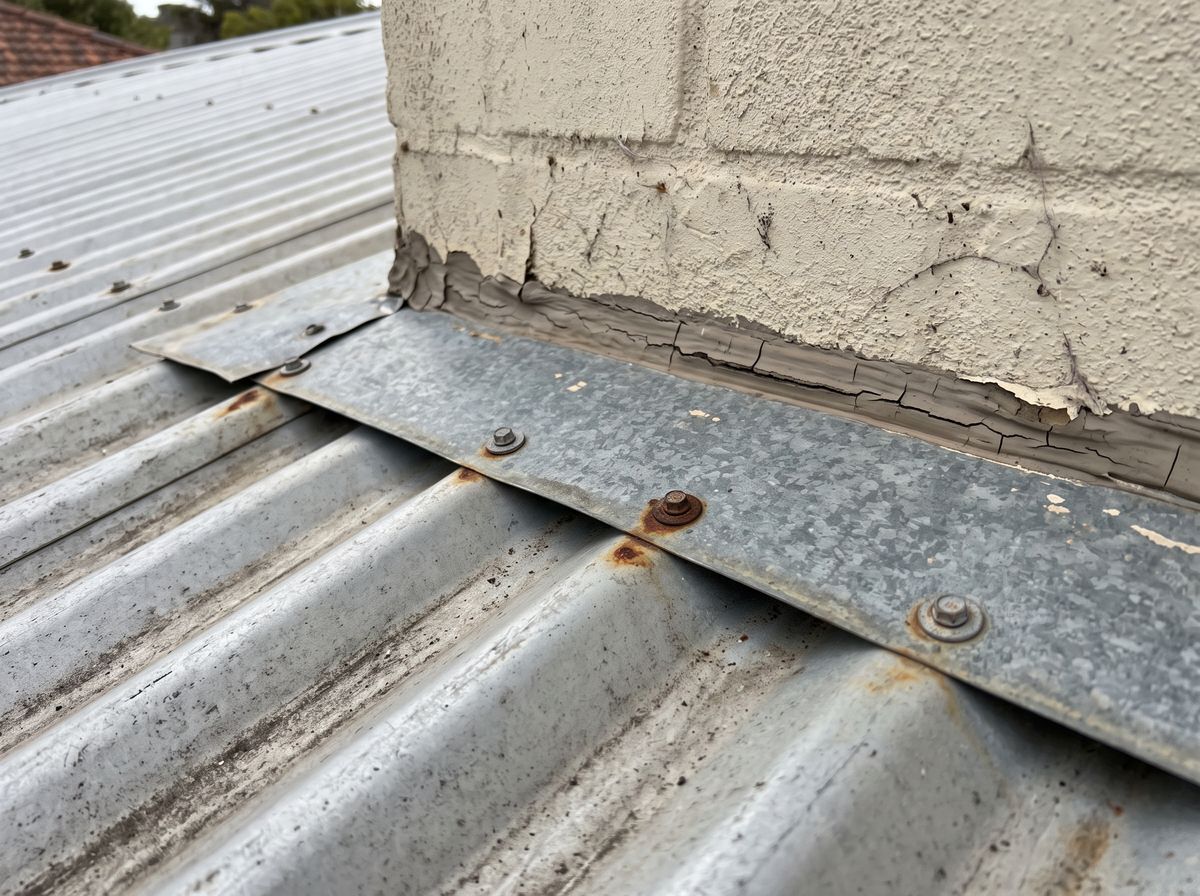
Many older homes have brick chimneys, used or not, and each needs flashings where it passes through the roof. Cracked mortar or render, a loose capping or a failed flashing can let water run down inside. Ask whether chimney flashings are included in any roof quote and whether the chimney itself looks sound. See roof flashing repairs.
Box gutters behind parapets
A box gutter sits inside the line of the building rather than hanging off the eaves, so when it overflows, water goes into the walls or ceiling instead of outside. An inspection should check the outlet, any sump or rainhead, the overflow provision and the lining; see gutter repairs and roof leak repair.
Bullnose verandahs
Bullnose sheets have to be rolled to the right curve, the verandah-to-wall junction needs its own flashing, and the timber frame is worth checking whenever the sheets come off. On a heritage place, a street-facing verandah may need to keep its original form.
Age, battens and sarking
Many older roofs, particularly tile roofs, have no sarking, the membrane beneath the roof covering that helps manage water and heat. A re-roof is the natural time to ask about adding it; see sarking and insulation. Old battens and framing can also need repair once the covering is off, so a quote should explain how that will be priced and approved.
Asbestos in mid-century work
Homes and additions built before about 1990 may contain asbestos cement, often in sleepouts, lean-tos, verandah infill, patios and sheds. Do not drill, cut, sand, walk on or pressure clean suspected asbestos, and only testing by a qualified person confirms it. A homeowner may remove up to 10 square metres of bonded asbestos from their own home following strict safety steps, though WorkSafe strongly recommends a licensed removalist; larger amounts, or any friable asbestos, must be removed by one. See our asbestos roofs guide.
Permits and local rules#
Permit and planning questions go to the City of Vincent, City of Perth, Town of Victoria Park, City of South Perth or City of Bayswater, depending on the address.
- Building permits. The City of Vincent lists re-roofing among work that usually needs a building permit, and Building and Energy’s guidance is that replacing a roof covering with a different shape or weight, such as tiles to steel sheeting, will usually require one. Ask the relevant council’s building team before work starts.
- City of Vincent heritage places. Works to places on the State Register of Heritage Places, the City of Vincent Heritage List or the Central Perth Heritage Inventory are likely to need development approval, although like-for-like roofing repairs that do not change a heritage place’s appearance are exempt, subject to conditions about how the place is listed.
- Vincent’s roof guidelines for heritage places. The City’s development guidelines say an original corrugated iron roof should be replaced with ZINCALUME steel or pre-painted steel such as COLORBOND steel in a matching profile and consistent colour, that replacing an original tile roof with steel is not supported, and that original details such as finials, chimneys and parapets should be kept.
- Character retention and heritage areas. Vincent also has character retention areas and heritage areas with their own guidelines; contact its Development and Design team before works.
- Other councils. Ask the planning team whether the property is heritage listed or in a heritage area.
See building permits for roof work for when a registered builder is needed.
Common jobs and what to ask#
- Re-roofing corrugated iron. Ask about matching the profile, replacing battens, adding sarking and keeping chimney and verandah details. See roof replacement.
- Chimney and wall flashings. Ask whether new flashings are cut into the brickwork or surface-fixed with sealant.
- Removing asbestos additions. Ask who holds the removal licence. See asbestos roof replacement.
- Is the property heritage listed, in a heritage area or in a character retention area?
- Which original details, such as chimneys, finials or the verandah, will be kept?
- Does any part of the roof or additions need asbestos testing first?
Getting a quote in the inner suburbs#
Older homes have more variables, so in the quote form mention:
- the era of the house and any known heritage listing;
- parapets, box gutters, chimneys or a bullnose verandah;
- shared walls with a neighbour and any rear lane access;
- any additions you suspect contain asbestos (do not disturb them to check).
Frequently asked questions
Can a heritage-listed home in Vincent with an original tile roof be changed to steel?
The City of Vincent’s development guidelines for heritage places say replacing an original tile roof with steel is not supported. Talk to the City’s planning team before getting re-roofing quotes for a listed home.
Why does water come through the ceiling near a parapet wall in heavy rain?
A common cause is a box gutter behind the parapet that has blocked or cannot carry the volume of water, so it overflows inside. Flashings along the parapet are another suspect, and an inspection should check both.
Should a bullnose verandah be re-roofed at the same time as the main roof?
Often it makes sense, because the access equipment is already in place and the junction with the house can be reflashed once. If the verandah sheets are sound, ask the contractor to quote both options.
Sources
- Building and Energy: report raises the roof on replacement compliance
- City of Vincent: building permits for your property
- City of Vincent: development on heritage properties information sheet
- City of Vincent: Local Planning Policy, development guidelines for heritage places
- WorkSafe WA: removing asbestos