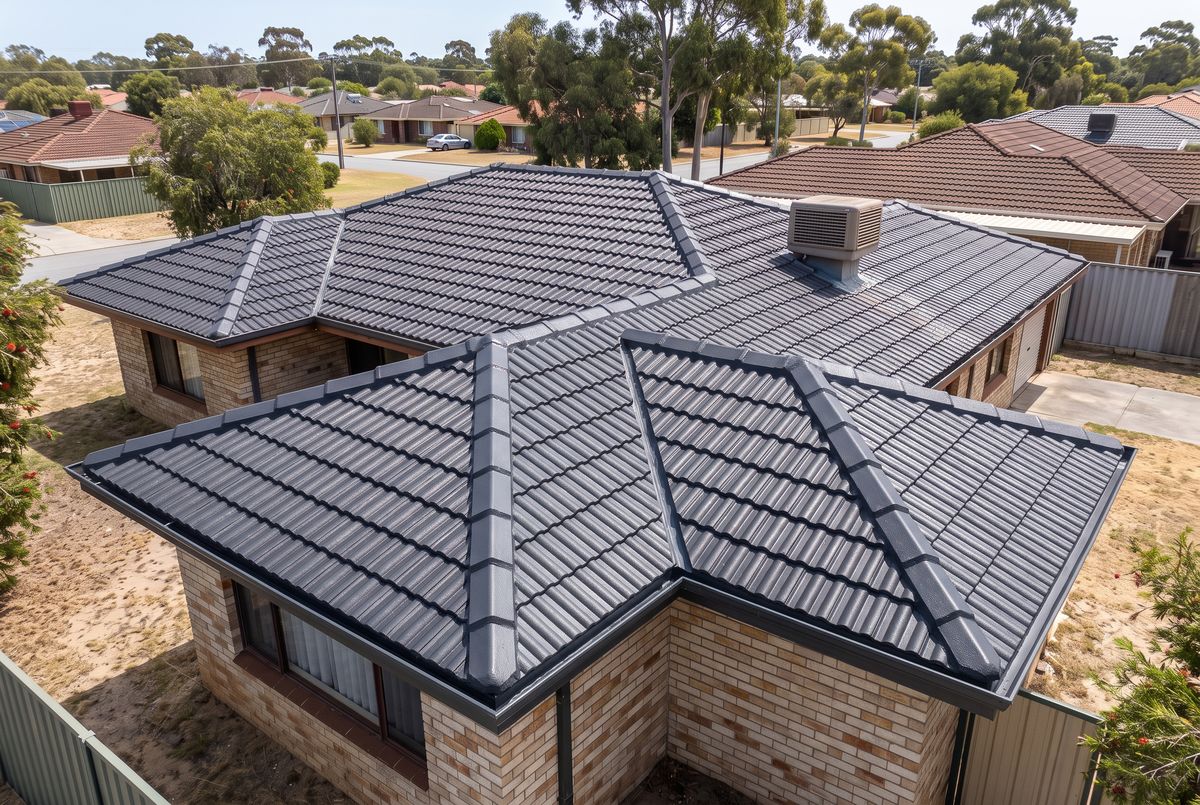
A restoration is a bundle of work, not a single product. Two quotes that both say “full roof restoration” can describe very different jobs: one may replace twenty tiles, rebed the ridges and apply three coats of membrane, while another cleans the roof and applies a single coat of paint. The value is in the scope, so this page is mostly about how to read it.
In Perth, restoration is most often discussed for concrete tile roofs, which are common across the suburbs, and for steel roofs whose paint has faded or chalked in the sun. Terracotta and older steel roofs can also be restored, but the right treatment depends on the material.
When is a restoration the right job?#
Restoration makes sense when the roof covering itself is still worth keeping and most of the problems are at the surface or in specific components. An inspection should establish that. These are the situations where homeowners commonly ask about it:
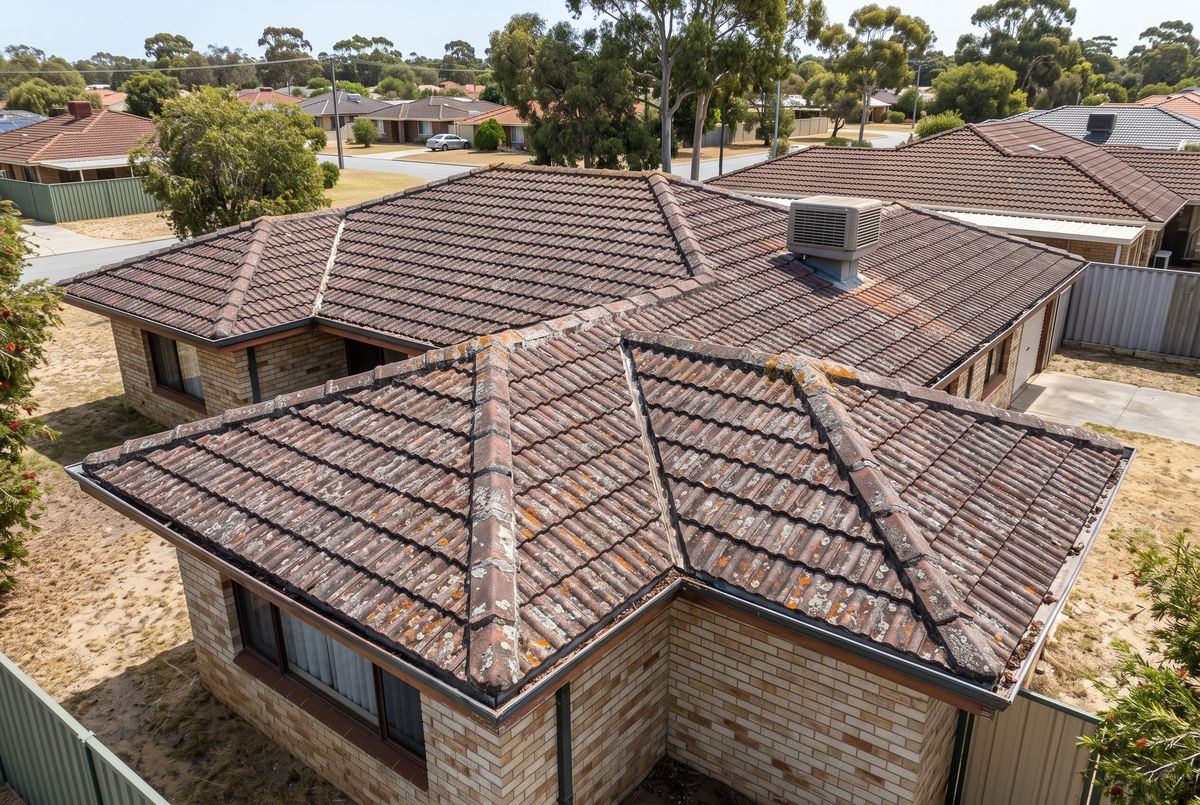
- Concrete tiles that are faded, porous-looking or covered in lichen, but not widely cracked or crumbling.
- Ridge and hip capping with cracked or missing pointing, or caps that have moved.
- A handful of broken or slipped tiles rather than widespread breakage.
- A steel roof with faded, chalky paint but no rust-through, loose sheets or failed fixings.
- Preparing a property for sale or rental, where the goal is a sound roof that also presents well.
- A building inspection report that lists ridge, pointing or tile defects on an otherwise serviceable roof.
If the main complaint is a single leak, start with a roof leak repair instead. A coating does not find or fix a leak on its own. If tiles are breaking widely, sheets are rusted through or the battens and fixings are failing, read about roof replacement and ask for the findings that support each option. Our repair, restoration or replacement guide sets out the differences side by side.
What does a roof restoration usually involve?#
The exact sequence depends on the roof, but a tile roof restoration commonly follows these stages. Our restoration process guide explains each one in more detail.
- Inspection and scope. The roof is checked for broken tiles, ridge and pointing condition, valleys, flashings and gutters. You should receive a written scope that separates necessary repairs from optional work.
- Cleaning. Pressure cleaning removes dirt, lichen and loose material so repairs and coatings can bond. Asbestos cement roofs must never be pressure cleaned in WA.
- Repairs. Broken tiles are replaced, ridge caps are rebedded where needed and repointed, and valleys or flashings are repaired as agreed.
- Preparation. Surfaces are dried, masked and, where the coating system requires it, primed or sealed.
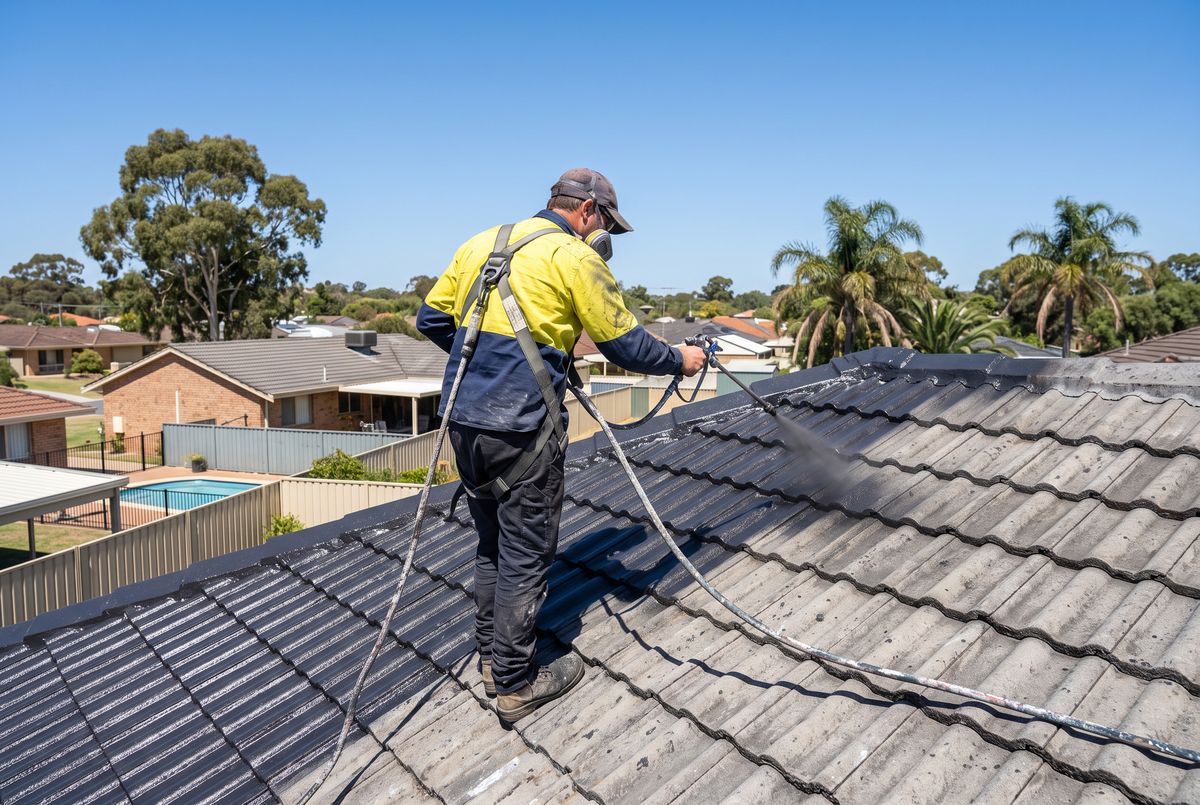
- Coating. A coating system compatible with the tile or metal is applied in the agreed number of coats. See roof painting for what to ask about products.
- Clean-up and handover. Gutters and downpipes are cleared of debris and you receive photos, product details and any warranty documents from the contractor.
What should a restoration quote clarify?#
A restoration quote should let you see exactly what you are paying for. Before comparing prices, check that each quote answers the same questions:
- The findings. What did the inspection find, and where? Photos make this much easier to compare.
- Repairs by item. How many tiles are allowed for replacement, which ridges are being rebedded versus repointed, and whether valleys, flashings or gutters are included.
- Cleaning method. Pressure cleaning, chemical treatment or both, and how runoff and overspray will be managed.
- Coating system. Product name, whether a primer or sealer is used, the number of coats and the colour. “Paint” and “membrane” are not interchangeable terms.
- Access and safety. Scaffolding, edge protection or other fall-protection measures, especially for two-storey homes.
- What happens if more damage is found. How extra work will be priced and approved before it starts.
- Warranty terms. What the contractor’s workmanship warranty covers and for how long, and what any separate product warranty requires.
Consumer Protection WA advises getting written quotes rather than verbal ones, and not accepting open-ended terms. A tradesperson must have your permission before doing extra work. Our guide to comparing roofing quotes has a side-by-side checklist.
What is usually included, and what is not?#
| Usually included | Often extra or excluded | Worth asking about |
|---|---|---|
| Pressure cleaning of the roof surface | Replacing tiles beyond the stated allowance | How many spare tiles are kept after the job |
| Repointing of ridges and hips | Full rebedding of every ridge cap | Which ridges are rebedded and why |
| Replacing a set number of broken tiles | Valley iron replacement | The condition of valleys and flashings |
| Primer or sealer and the agreed coats | Gutter and downpipe replacement | Whether gutters are cleaned at the end |
| Masking of walls, windows and paving | Repairs to internal ceilings or insulation | How overspray and runoff are controlled |
| Clean-up and removal of debris | Work around solar panels, aerials and evaporative coolers | Whether panels need to be lifted by an electrician |
Every contractor draws these lines differently, which is why two quotes for “the same roof” can differ so much. Ask each one to confirm what sits in each column for your roof.
What affects the price of a roof restoration?#
The price follows the roof and the scope rather than a fixed rate. The main factors are:
- Roof area and pitch. Restoration quotes are often based on the roof surface area, which is larger than the floor area because of the pitch. Our roof area calculator helps you sanity-check the area a quote is based on.
- Material and condition. Concrete, terracotta and steel need different preparation and products. Porous or heavily weathered tiles may need more preparation and coating.
- Repairs found at inspection. The number of broken tiles and the length of ridge to rebed or repoint can change the total more than the coating itself.
- Height and access. Two-storey homes, steep pitches, narrow side setbacks and fragile paving all add time and safety equipment.
- Roof features. Valleys, hips, skylights, solar panels, air-conditioning units and multiple roof levels add detail work.
- Coating system. The product range, number of coats and any primer or sealer.
For a fuller breakdown, see roof restoration costs in Perth.
Is restoration suitable for every roof?#
No. Some roofs are not good candidates, and an honest assessment should say so:
- Asbestos cement roofs. High-pressure water cleaning of asbestos cement is prohibited in WA because it spreads contaminated residue. These roofs need a different conversation; see asbestos roof replacement and our asbestos roof guide.
- Glazed terracotta. Glazed tiles are not normally coated. Restoration usually focuses on cleaning, repairs and ridge work.
- Steel with rust-through. Paint will not hold back corrosion that has perforated the sheet. Badly affected sheets need replacing first.
- Roofs with structural problems. Sagging lines, failing battens or widespread tile breakage call for investigation before any cosmetic work.
Perth conditions worth mentioning#
Perth’s long, hot summers are hard on coatings, sealants and pointing because of the intense sun, and most of the year’s rain arrives between May and September. Many homeowners notice ridge and tile problems at the first heavy rain after summer, so autumn is a common time to book inspections. On the coast, salt air shortens the life of exposed metal, so mention a beachside location when you enquire. Read more in Perth weather and your roof.
Questions to ask the contractor#
- Which repairs are necessary now, and which are optional or cosmetic?
- How many replacement tiles are included, and can you match my tile profile and colour?
- Which ridges will be rebedded, and which only repointed?
- What coating product and how many coats? Is it suitable for my tile or steel?
- How will you protect my walls, windows, paving, garden and neighbours from overspray and runoff?
- Who will be on the roof, and what fall protection will be used?
- What is your workmanship warranty, in writing, and what does the product warranty require?
- How will extra work be priced and approved if you find more damage?
Frequently asked questions
How long does a roof restoration take?
It depends on the roof size, the repairs found and the weather, because cleaning, repairs and coatings each need dry conditions. Ask the contractor for an expected duration and how weather delays are handled.
Does a roof restoration fix leaks?
Only if the scope identifies the source of the leak and repairs it. A coating alone is not a leak diagnosis, so mention any leaks in your enquiry and ask how the quote addresses them.
Can a terracotta roof be restored?
Yes, but usually differently from concrete. Unglazed terracotta may be coated with a suitable product, while glazed terracotta is normally cleaned and repaired rather than painted. Ridge work and broken tile replacement apply to both.
Is it worth restoring a roof before selling?
It can help if a building inspection is likely to flag ridge, pointing or tile defects, or if the roof looks tired in listing photos. Ask for an itemised scope so you can decide which repairs matter to a buyer and which are cosmetic.
Do I need to be home during a restoration?
Usually not for the whole job, but the contractor will need access around the house, and you may need to keep windows closed, move vehicles and keep pets inside on cleaning and coating days. Confirm the arrangements before work starts.