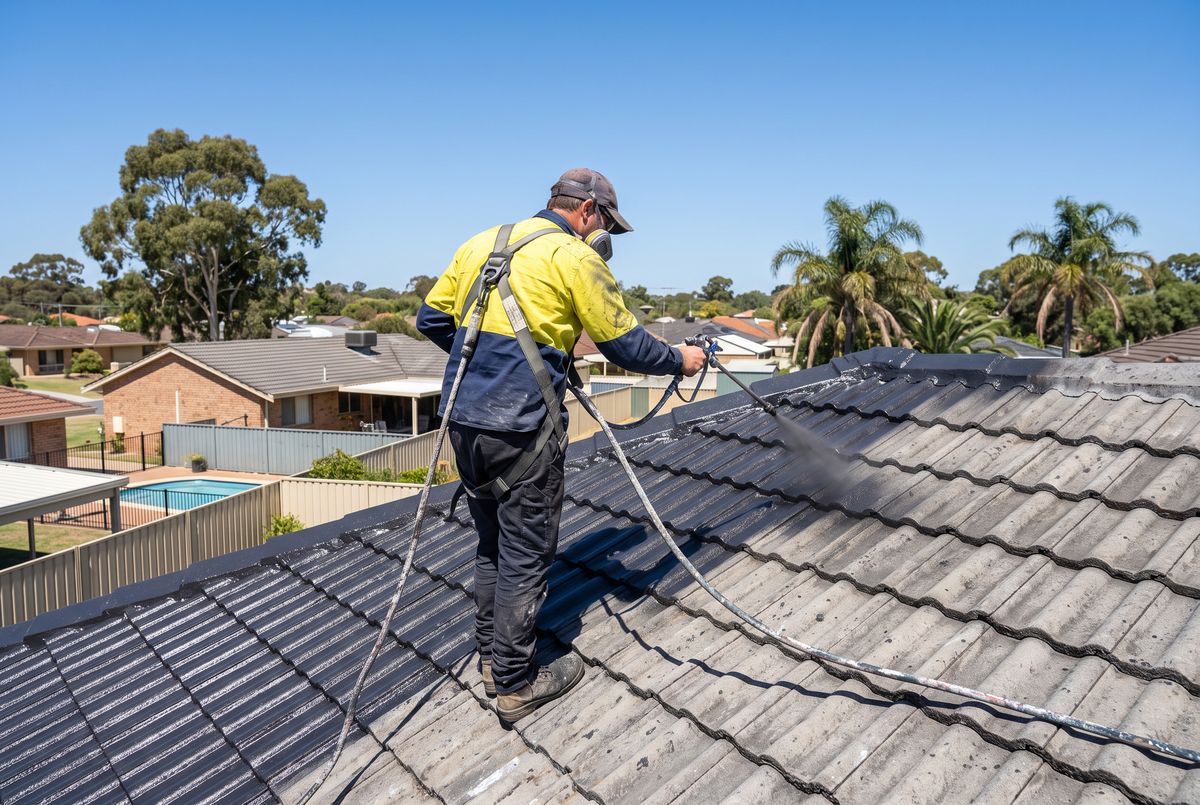
Our roof restoration page explains what a restoration is and how to compare quotes. This guide follows a typical tile roof restoration from start to finish, so you know what should be happening on each day, what a good result looks like at each stage and where shortcuts tend to hide.
The order matters. A coating applied over dirty tiles can peel, new pointing over loose ridge caps can crack, and a perfect finish over a cracked tile still leaks. Most of the quality in a restoration is in the stages you will never see once the final coat is on.
What are the main steps in a roof restoration?#
A tile roof restoration usually follows ten stages, although contractors group and name them differently. Metal roofs follow a similar path with different repairs, covered further down.
- Inspection and scope. The contractor checks tiles, ridges, valleys, flashings, gutters and any roof-mounted equipment, photographs the problems and writes a scope that separates essential repairs from optional work.
- Site set-up. Scaffolding or edge protection goes up, solar panels and other equipment are dealt with as agreed, and paving, gardens, cars and windows are protected.
- Cleaning. The roof is pressure cleaned to remove dirt, lichen, moss and loose surface material, often with a chemical treatment for growth.
- Repairs. Cracked and broken tiles are replaced, and valleys, flashings and other faults in the scope are fixed.
- Ridge work. Loose ridge and hip caps are lifted and rebedded in fresh mortar, then the ridges are repointed.
- Preparation. The roof is left to dry, debris is cleared, and anything that should not be coated is masked.
- Primer or sealer. A first coat binds the weathered surface and gives the topcoats something sound to grip.
- Topcoats. The agreed number of coats of a compatible coating are applied in the chosen colour.
- Drying and curing. Each coat dries before the next, and the finished coating is left to cure as the manufacturer specifies.
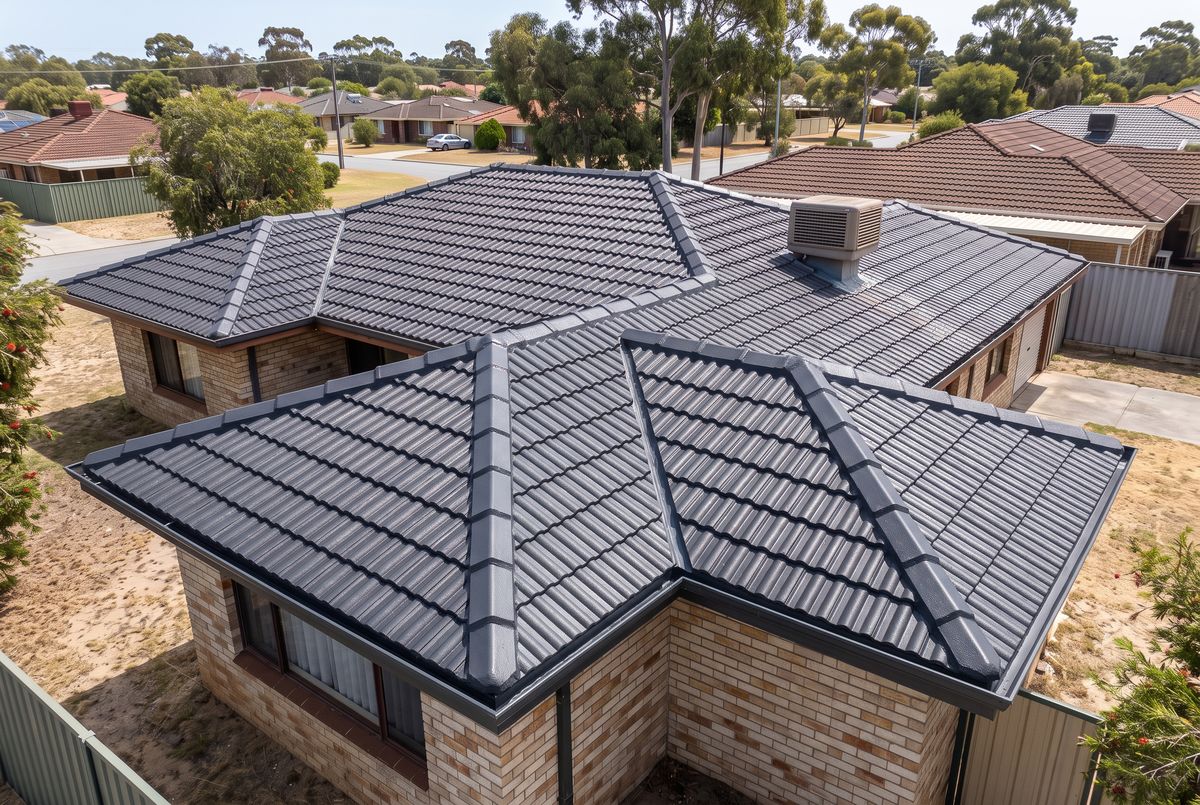
- Final check and handover. Gutters and downpipes are cleared, touch-ups are done, and you receive photos, product details and warranty documents.
What should the inspection and scope cover?#
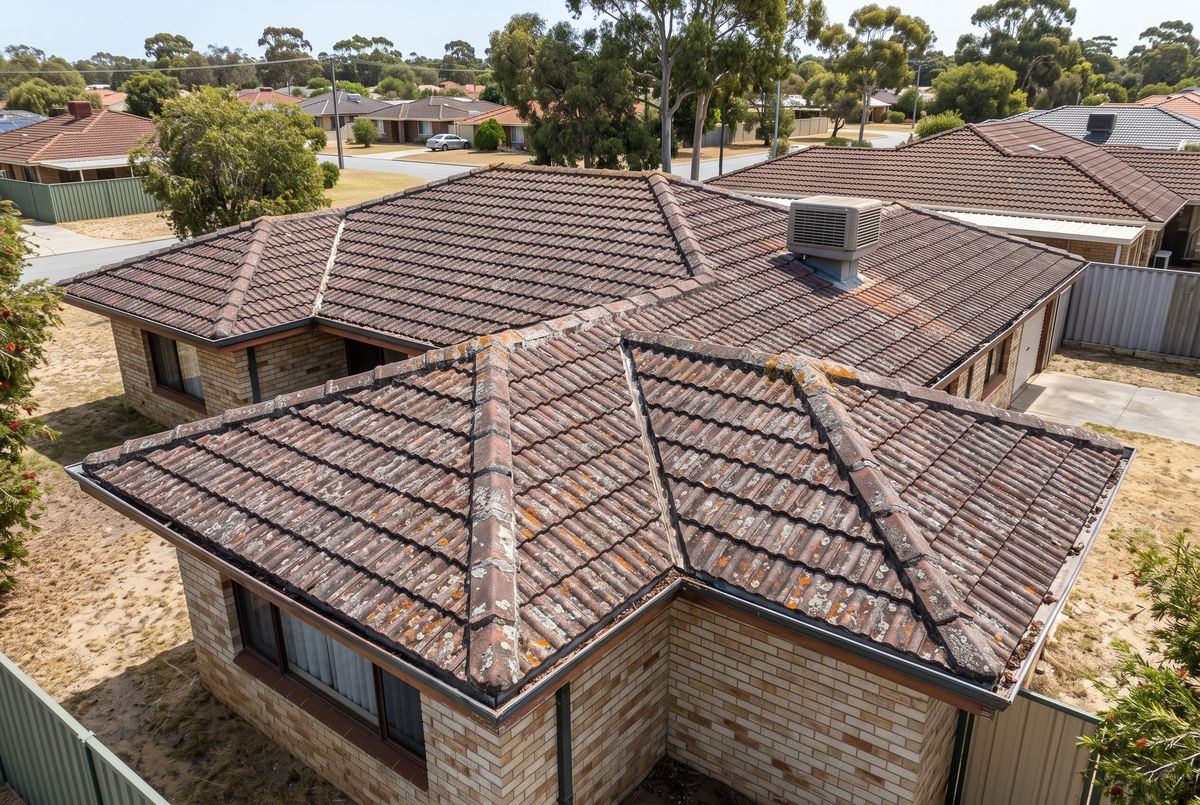
The scope is the plan for every later step, so it deserves the most attention. A good one records the condition of the roof with photos, lists repairs by item and location, names the cleaning method and coating system, and says how many replacement tiles are allowed for.
It should also say what happens if more damage turns up once the roof is clean, which is common because dirt and lichen hide cracks. Consumer Protection WA is clear that extra work needs your approval before it is done. Agree in writing how extra tiles or ridge work will be priced and approved. Our guide to comparing roofing quotes helps you line up two scopes.
How is the roof cleaned before coating?#
Cleaning removes everything that would stop repairs and coatings bonding, including lichen, moss, dirt and the loose, powdery surface of weathered tiles. Most tile roofs are pressure cleaned, and a chemical treatment may be used to kill growth.
Watch for how runoff is handled, because sludge goes into gutters, downpipes and gardens. Asbestos cement roofs are a firm exception: high-pressure water cleaning of them is prohibited in WA. See roof cleaning and lichen and moss on roofs.
Why do repairs come before the coating?#
A coating hides defects, so every repair has to be finished first. That means replacing cracked tiles, re-laying slipped ones, fixing valleys and flashings, and addressing any leak identified in the scope.
Cleaning often reveals hairline cracks that were not visible at the inspection. A careful contractor will show you photos and confirm before replacing more tiles than the scope allows. Matching replacement tiles is covered in our guide to cracked and broken roof tiles.
What is the difference between rebedding and repointing in a restoration?#
Repointing renews the top layer that seals the ridge caps, while rebedding removes the caps and resets them in fresh mortar. In a restoration, caps that are loose or sitting on crumbling bedding should be rebedded before pointing goes on; repointing alone over a weak bed tends to crack again.
Ask which ridges and hips will be rebedded and which only repointed, and why. See roof repointing for more on both.
How is the roof prepared for coating?#
Preparation is about a dry, clean, protected surface. The roof needs to dry thoroughly after cleaning before any primer goes on, and loose debris from the repairs is cleared.
Masking protects anything that should not be coated, such as walls, windows, solar panels, skylights and flashings in a different colour. Overspray drifts, so ask how cars, neighbours’ property and outdoor furniture will be protected on coating days.
What do the primer and topcoats do?#
The first coat, often called a primer or sealer depending on the manufacturer, soaks into and binds a porous or chalky surface so the topcoats adhere. The topcoats then provide the colour and weather protection.
The quote should name the products, the number of coats and the colour, and the products should be designed to work together as one system. Coats are applied by spray or roller, with attention to tile edges, overlaps and around penetrations. If you want to check the work, ask to see photos between coats. See roof painting for questions about products.
Why does drying and curing time matter?#
Coatings need the right conditions to dry between coats and to cure fully afterwards. Manufacturers set limits on temperature, humidity, dew and rain, and a coat applied outside them may not bond or cure properly.
In Perth, that can mean working around winter fronts and very hot summer days. Rain on a fresh coat can mark or wash it, so ask how the contractor watches the forecast and what happens if weather damages wet coating. Keep people and other trades off the roof until the contractor says the coating has cured.
What should you receive at handover?#
The final stage should leave you with a clean site and a clear record. Expect gutters and downpipes cleared of restoration debris, any overspray cleaned up, and a final walk-around from the ground. Ask for:
- Before and after photos, including the ridges and any repaired areas.
- The product names, colour and number of coats applied.
- Written workmanship warranty terms from the contractor.
- Product warranty documents, and whether they need registering.
- Any spare tiles left on site, and where they are stored.
- An invoice that matches the agreed scope and any approved variations.
- Advice on maintenance and what to avoid, such as foot traffic on the coating.
How is a metal roof restoration different?#
A metal roof follows the same logic with different repairs. There is no ridge bedding, so the repair stage focuses on replacing rusted-through sheets, renewing loose or corroded screws, treating surface rust and fixing flashings and sealants.
Bare or rusted areas need a primer suited to metal, and the coating must be compatible with the existing paint or metallic coating. See metal roof repairs and rusty roofs and gutters.
Where do shortcuts usually happen?#
Most problems with restorations trace back to a stage that was rushed or skipped. These are the ones worth asking about:
| Stage | Shortcut to watch for | What to ask |
|---|---|---|
| Cleaning | Coating before the roof is fully dry | How long will you wait after cleaning, and how do you check? |
| Repairs | Coating over cracked tiles | Will you photograph and replace cracked tiles before coating? |
| Ridge work | Repointing over loose caps | Which ridges will be rebedded? |
| Primer | Skipping it on weathered tiles | Which primer or sealer, and why? |
| Topcoats | Fewer coats than quoted | Can I see photos between coats? |
| Curing | Coating with rain forecast | What happens if rain marks a fresh coat? |
For how long the finished result is likely to hold up, read how long a roof restoration lasts.
Frequently asked questions
Why are the ridges done before the roof is coated?
Ridge work involves lifting caps, laying mortar and applying pointing, which disturbs the surrounding tiles. Doing it first means the coating covers the finished ridge area evenly and is not damaged by later work.
Can a roof restoration be done in a Perth winter?
It can, but work needs dry spells for cleaning to dry out and coatings to cure, so winter jobs are more likely to be rescheduled around rain. Ask how the contractor plans for weather and how delays are handled.
What is the difference between a primer and a sealer?
The terms vary by manufacturer. Both describe a first coat that binds a weathered surface and helps topcoats stick. The quote should name the actual product and explain why it suits your tiles or metal.
Can I ask for progress photos during a restoration?
Yes, and it is a reasonable request. Photos after cleaning, after repairs and between coats let you see the stages that are hidden once the final coat is on.
Will spare tiles be left after a restoration?
Only if you ask or the contractor offers. Spare tiles are useful for future repairs, especially if your profile is hard to find, so ask for any surplus to be left and stored somewhere dry.