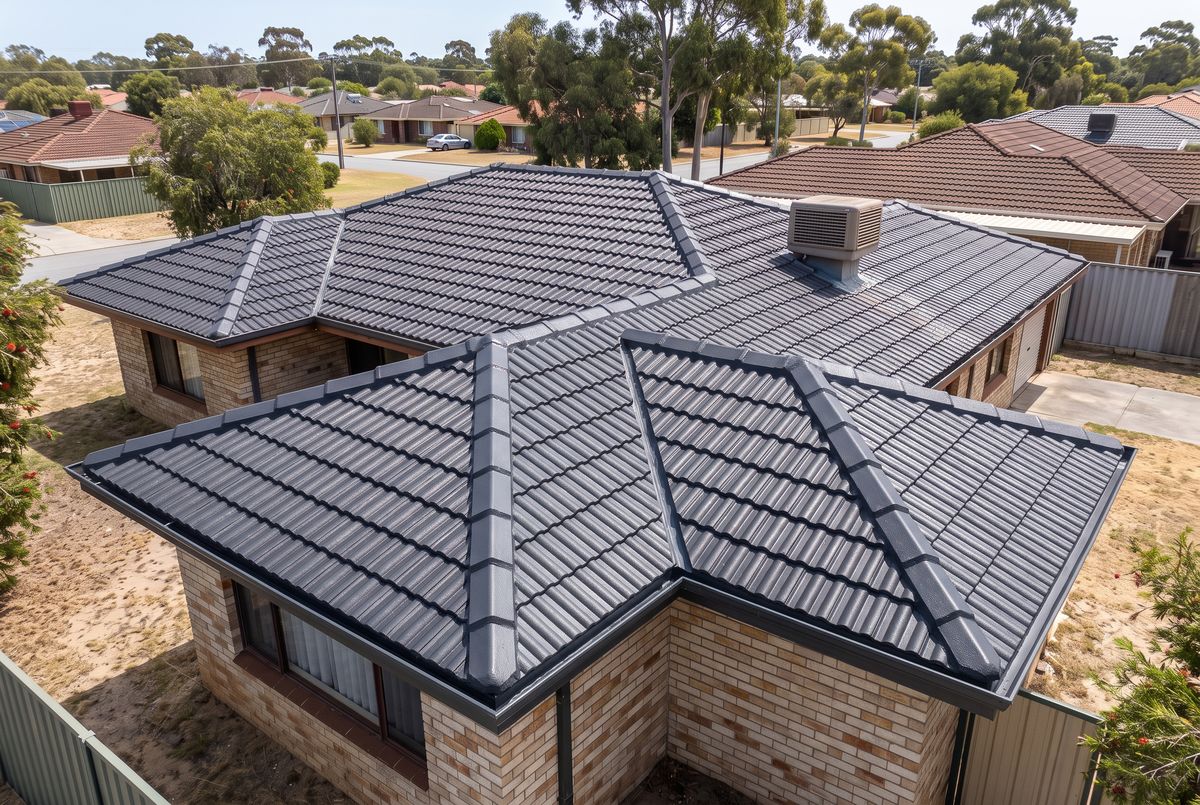
It is the question almost everyone asks before paying for a restoration, and the honest answer is that it depends. You will see confident year figures in advertising, but they may describe a warranty period or a best case, not what a particular roof will do. Two restorations on the same street can age very differently.
A more useful way to think about it is that a restoration is several pieces of work, each with its own life: the coating, the new pointing, the replaced tiles and the original roof underneath, which keeps ageing whatever is painted on top. This page explains what decides how well those pieces hold up and how to judge a contractor’s promises.
Why is there no standard lifespan for a roof restoration?#
Because the result depends on the roof, the work and the conditions, all of which vary. A coating on sound, well-prepared concrete tiles in a sheltered suburb faces a very different life from the same product on porous, weathered tiles under gum trees near the coast.
The tiles or sheets underneath also set a limit. A coating can protect and refresh a roof that is still structurally sound. It cannot stop old, brittle tiles from cracking or rusted-through steel from failing, so a restoration on a roof near the end of its life will not last like one on a roof in good condition.
What decides how long a restoration lasts?#
Six factors do most of the work. Each one is something you can ask about before you accept a quote.
Cleaning and preparation
Coatings bond to what they are applied to. If lichen, dirt or the loose powdery surface of weathered tiles is left behind, or the roof is still damp when the first coat goes on, the coating can lift or peel early. This is the stage most often rushed, and the hardest to check afterwards. Our guide to the restoration process explains what good preparation looks like.
Repairs done first, and repairs left out
A restoration lasts only as long as its weakest repair. Cracked tiles that were coated over, ridge caps repointed without rebedding where needed, and valleys or flashings left untouched will cause problems whatever the coating. A clear scope that lists every repair is the best protection.
The coating system and number of coats
The products, the primer or sealer, and the number and thickness of coats all matter. A system designed for your tile or metal, applied as the manufacturer specifies, gives the coating its best chance. Ask for product names in the quote, and compare like with like; see roof painting.
The condition of the roof underneath
Porous, heavily weathered tiles absorb more of the first coat, and brittle tiles keep cracking. On steel, coating over active rust without treating it first lets corrosion continue under the paint. An inspection should tell you whether the roof is a good candidate.
Exposure: sun, salt and trees
Perth’s strong summer sun and UV fade and break down coatings, pointing and sealants over time, and north-facing slopes get the most sun, with west-facing slopes taking the hot afternoon sun. On the coast, salt-laden air speeds corrosion of metal roofing, fixings and flashings, especially in areas rain does not wash. Overhanging trees drop leaves into gutters and valleys, keep surfaces damp and shaded, and encourage lichen.
Maintenance afterwards
A restored roof still needs looking after. Blocked gutters, branches rubbing on the roof and foot traffic from other trades all shorten the life of the work. See the maintenance section below.
Which parts of a restoration wear first?#
Different components age at different rates, so it helps to know what to watch.
| Component | What wears it | Signs to look for from the ground |
|---|---|---|
| Coating | Sun, UV, weather, foot traffic | Fading, chalky surface, patchy colour, peeling |
| Ridge pointing | Movement, heat, weather | Hairline cracks, gaps, pieces in gutters |
| Replaced tiles | Breakage from impact or foot traffic | New cracks, slipped tiles |
| Valleys and flashings | Debris, salt air, failed sealant | Rust, leaf build-up, lifted edges |
| Gutters | Leaf litter, standing water | Overflowing, rust, sagging |
What is the difference between a product warranty and a workmanship warranty?#
A product warranty comes from the coating manufacturer and covers the product itself, while a workmanship warranty comes from the contractor and covers how the work was done. They are separate documents with separate conditions, and neither is a prediction of how long your roof will last.
| Product warranty | Workmanship warranty | |
|---|---|---|
| Who gives it | The coating manufacturer | The contractor who did the work |
| What it relates to | The coating product, on the manufacturer’s terms | Preparation, repairs and application |
| Questions to ask | Does it need registering? Does it require an approved applicator or a set number of coats? | What exactly is covered, and how do I make a claim? |
| If something goes wrong | Follow the claim process in the warranty document | Contact the contractor first |
Both should be in writing, with the length of cover and any conditions stated plainly. Under the Australian Consumer Law, services must also be provided with an acceptable level of care and skill and be fit for any purpose you specified. Consumer Protection WA explains that a warranty is a bonus to these consumer guarantees and cannot replace or remove them, and the guarantees still apply after a warranty ends.
What should you ask before accepting a restoration quote?#
These questions help you test a contractor’s claims about durability:
- What do you expect from this restoration on my roof, and why?
- Which products will be used, how many coats, and is a primer or sealer included?
- Is the product warranty registered in my name, and what does it require?
- What does your workmanship warranty cover, and is it in writing?
- What could void either warranty, such as later work by solar or antenna installers?
- Can the warranties be transferred if I sell the house?
- What maintenance do you recommend afterwards?
Our list of questions to ask a roofer covers the wider conversation, and comparing roofing quotes helps you weigh the answers.
What maintenance helps a restoration last longer?#
Simple, regular care protects the work. None of it involves going onto the roof yourself.
- Keep gutters, downpipes and valleys clear, or have them cleaned, especially before winter and in leafy areas. See gutter repairs if they are failing.
- Trim branches that overhang or touch the roof.
- Ask other trades to tell you before they go onto the roof, and to use care around the coating; check from the ground afterwards.
- Look at the roof from the ground after big storms and each autumn.
- Get small problems, like a cracked tile or a gap in the pointing, fixed early.
- Do not pressure clean a coated roof yourself; ask the contractor or product supplier how it should be cleaned.
Our roof maintenance checklist sets out a seasonal routine.
When is restoration not worth it?#
If the tiles are cracking across the roof, the battens are failing or steel sheets are rusted through, a restoration may not last long enough to justify the cost. In those cases, ask for findings that support each option and compare them; our guide to repair, restoration or replacement and the page on roof replacement explain the trade-offs.
Frequently asked questions
Is a longer warranty a sign of a better restoration?
Not on its own. A long warranty may come with conditions and exclusions that limit it, and a warranty is not a prediction of lifespan. Compare what each warranty covers, who stands behind it and the scope of work.
Can a restoration make an old roof as good as new?
No. A restoration can repair, protect and refresh a roof that is still sound, but the original tiles or sheets keep ageing underneath the coating. It does not reset the roof’s structure or the life of its materials.
Is a roof coating warranty transferred if I sell the house?
It depends on the warranty terms. Some can be transferred and some cannot, and some need registering. Ask the contractor and the manufacturer, and keep the documents with your property records.
Will a restored roof need recoating eventually?
Yes. Coatings weather with sun and rain, so a restored roof will eventually need attention again. Good preparation, the right products and regular maintenance put that further off.
Does a darker or lighter colour change how long a restoration lasts?
Colour affects how much heat the roof absorbs, and lighter colours typically absorb less. How that affects a particular coating’s durability is a question for the product supplier, so ask before choosing.