Unsafe right now? For life-threatening emergencies call Triple Zero (000). For storm damage you cannot make safe yourself, call the SES on 132 500. For the repair itself, request a quote and choose “Urgent”.
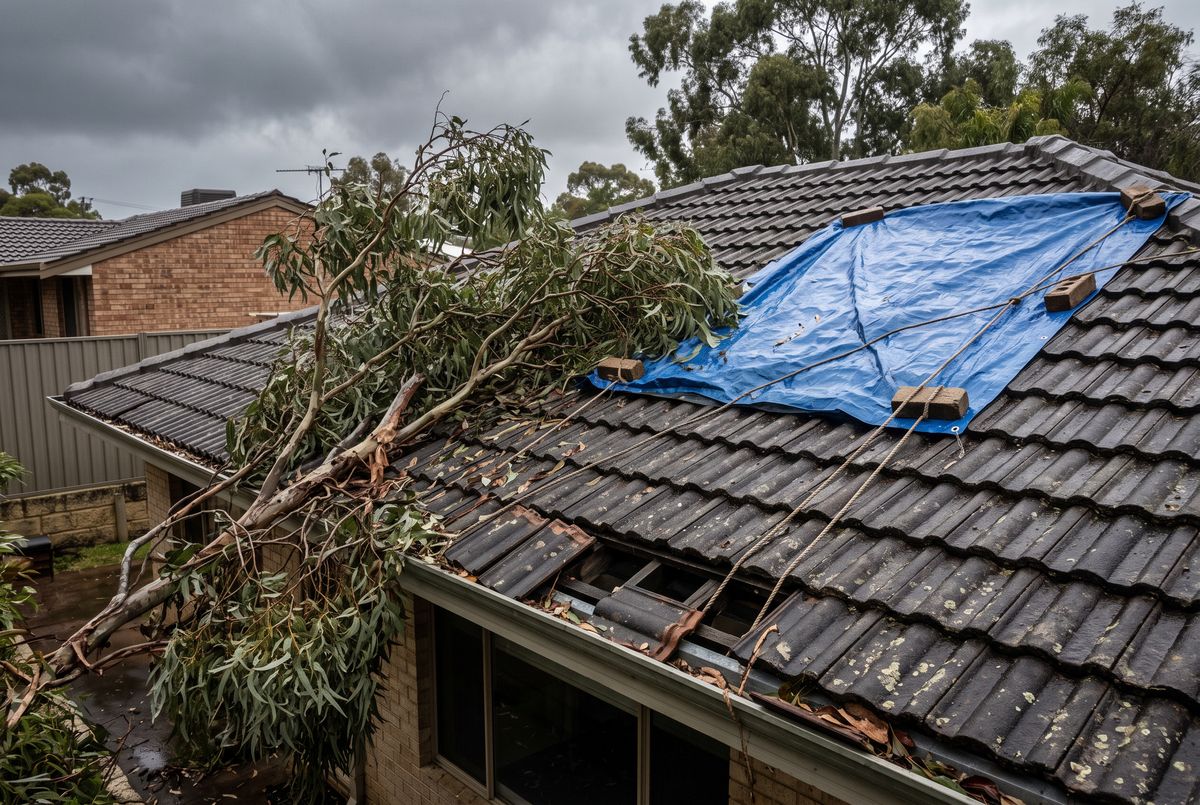
Perth’s winter cold fronts bring heavy rain and strong winds, and roofs take the brunt: tiles lifted at the edges, ridge caps dislodged, sheets peeled back, gutters torn off and branches dropped onto the roof. The order of what you do next matters. Safety comes first, then a record of the damage, then the insurer, and only then permanent repairs.
What should I do first after a storm damages the roof?#
Make people safe before thinking about the roof. Work through these steps from the ground and from inside, never from the roof.
- Check everyone is safe. Call 000 if anyone is injured or in danger.
- Stay clear of power lines. Keep at least 8 metres away from fallen lines and call Western Power on 13 13 51. Keep away from wet light fittings and power points, and have an electrician check them before use.
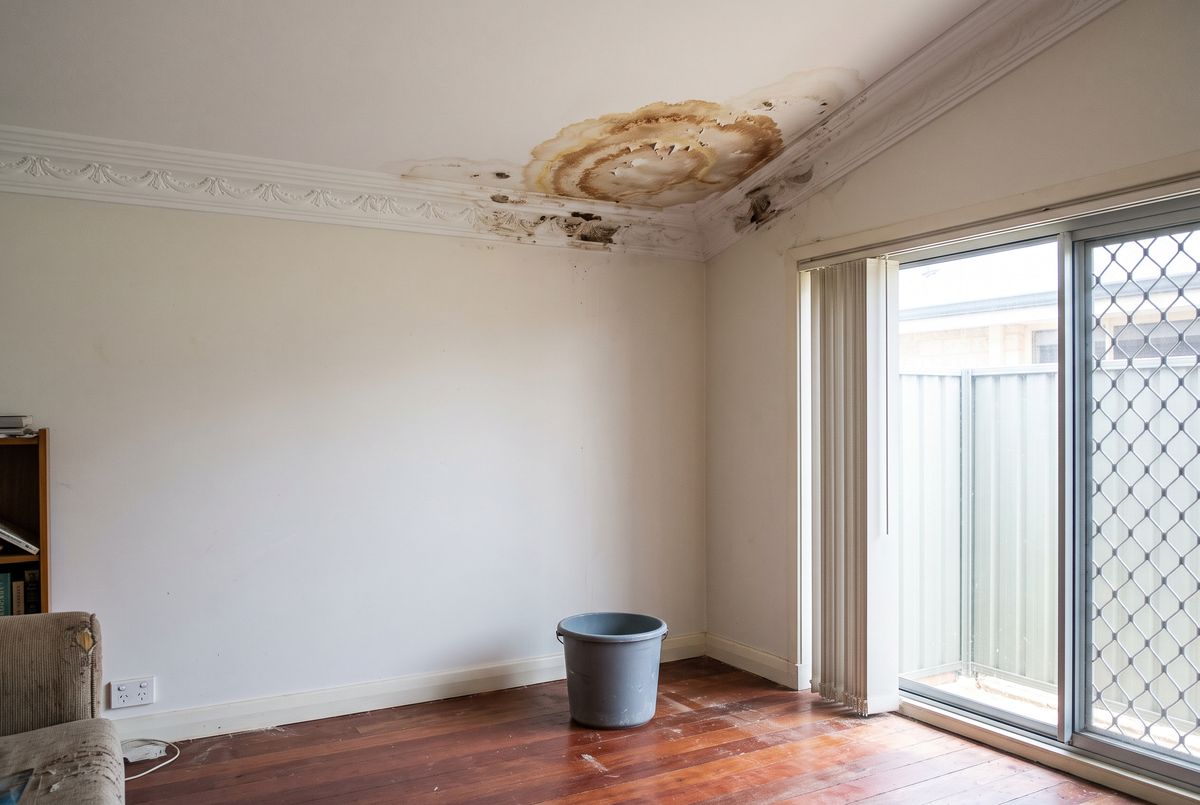
- Watch the ceilings. Wet plasterboard that sags or bulges can collapse. Keep people and pets out of that room and move belongings if it is safe to do so.
- Call the SES if you cannot make it safe. SES volunteers can make temporary emergency repairs, such as covering a damaged roof. Calls are prioritised by need, so help may take time.
- Photograph the damage. Record it before anything is moved or covered, where you can do so safely.
- Contact your insurer. Report the damage as soon as you can and ask how they want repairs arranged.
Who should I call?#
This table summarises DFES, SES and Western Power guidance.
| Situation | Who to contact |
|---|---|
| Anyone injured or a life-threatening situation | Triple Zero (000) |
| Fallen or damaged power lines | Western Power on 13 13 51, and 000 if life is at risk |
| Roof or ceiling damage you cannot make safe yourself | SES on 132 500 |
| Debris removal or temporary emergency repairs | Your local government and/or the SES |
| Permanent repairs and claims | Your insurer, then a roofing contractor |
The SES does not organise permanent repairs or do basic repairs you can manage yourself. DFES directs non-urgent requests to insurance providers.
How should I record storm damage for an insurance claim?#
Good records make a claim simpler and help the contractor quote accurately. From the ground, from inside and from safe windows, capture:
- Wide photos of each side of the house showing the roof line, then closer shots of visible damage.
- Fallen branches, displaced tiles or sheets, and damaged gutters on the ground.
- Ceiling stains, wet insulation visible through a manhole, and water-damaged belongings.
- The date and time, and any emergency steps you took, such as buckets or a tarp fitted by the SES.
- Receipts for emergency costs.
DFES advises checking with your insurer before entering a contract with cleaning or repair contractors. Your insurer may send an assessor and may arrange repairers itself. Our guide to roof insurance claims in WA covers the process in more detail.
What is the difference between a temporary and a permanent repair?#
A temporary repair stops more water getting in until the roof can be fixed properly. A tarp over broken tiles, a sheet screwed back down or a blocked opening are all temporary. They can shift in the next front, and ropes and weights can break more tiles, so they should be checked and replaced with a proper repair as soon as practical.
A permanent repair restores the roof: matching tiles replaced, ridge caps rebedded, sheets refixed or replaced, flashings and gutters repaired. Ask the contractor to record what was done temporarily and what remains, because your insurer may want both described. If water came inside, our guide on what to do when your roof leaks covers the inside of the house.
What should a storm damage quote clarify?#
A storm repair quote should be specific enough for you and your insurer to understand it. Check that it covers:
- The cause. Whether the damage is consistent with the storm, or partly pre-existing wear. Insurers may ask about this.
- The extent. Which tiles, sheets, ridges, flashings and gutters are affected, ideally with photos.
- Temporary work already done. What it was, who did it and whether it is included.
- Materials. Whether matching tiles or the same steel profile and colour are available.
- Hidden damage. How damaged battens, sarking or ceilings found during the work will be priced and approved.
What is usually included, and what is not?#
| Usually included | Often extra or excluded | Worth asking about |
|---|---|---|
| Replacing damaged tiles or sheets | Internal ceiling and plaster repairs | Whether a report for the insurer is provided |
| Rebedding or refixing dislodged ridge caps | Tree removal and green waste | Who removes the fallen branch from the roof |
| Refixing or replacing damaged flashings | Electrical checks after water entry | Whether tiles can be matched |
| Removing storm debris from the roof | Full gutter replacement | Whether the remaining roof was also checked |
What affects the price of storm damage repairs?#
The price depends on how much of the roof is affected and how hard it is to repair safely. The main factors are the number of damaged tiles or sheets, whether matching materials are available, ridge and flashing work, damage to battens or framing underneath, access and height, removal of fallen branches and whether temporary work has to be undone first. For a fuller explanation, see roof repair costs in Perth.
Why do some roofs lift off in strong winds?#
Building and Energy and James Cook University’s Cyclone Testing Station reviewed wind damage to re-roofed buildings in WA and found replacement roofs were over-represented, with inadequate tie-downs a recurring problem. Across the Perth metropolitan area, roughly half of the buildings that lost roofs in storms had lighter metal sheeting fitted in place of the original heavy tiles or asbestos sheets. If your roof has been replaced in the past, ask the contractor to look at how it is tied down while they are repairing it. For metal roofs, see metal roof repairs.
What about trees and branches?#
Branches over the roof can break off in strong winds and damage it. DFES advises keeping branches trimmed around the house and power lines, and notes a contractor may be needed to clear trees from lines. Treat a branch lying on a power line like a fallen line: keep well away and call Western Power. Ask your local government whether a large tree needs approval before it is removed.
If the storm has broken an asbestos cement roof, keep people away from the pieces and do not sweep, hose or bin them. WA Health warns that storm-damaged asbestos roofs can spread contamination; see our asbestos roofs guide.
How can I prepare my roof for winter storms?#
Perth’s cool season runs from about April to October, and most rain falls between May and September. DFES recommends these steps before it starts:
- Have loose tiles and cladding checked, from the ground or by a professional.
- Clear gutters and downpipes so they do not overflow.
- Trim branches overhanging the roof.
- Secure trampolines, outdoor furniture and bins.
- Check your home insurance is current.
- Set up watch zones on Emergency WA for alerts.
For broken or slipped tiles found before winter, see tile roof repairs.
Questions to ask the contractor#
- Are you working with my insurer, or will you provide a quote and report I can send them?
- Is the damage consistent with the storm, and what is pre-existing?
- Can you match my tiles or sheet profile and colour?
- Will you check the rest of the roof, including tie-downs, while you are up there?
- What fall protection will you use on a wet or damaged roof?
Frequently asked questions
Will my insurer want a report from the roofer?
Your insurer may ask for a quote or report describing the cause and extent of the damage, or may send its own assessor. Ask what they need before the contractor visits.
Can I get the roof repaired before the insurance assessor visits?
Temporary work to stop further damage is often necessary, but check with your insurer before signing a contract for permanent repairs. Keep photos and receipts for anything done in the meantime.
Is it safe to stay in the house after storm damage to the roof?
It depends on the damage. A sagging or bulging ceiling, water near electrical fittings or structural damage are reasons to keep out of that area and call the SES or 000. If in doubt, follow emergency services advice.
Should I accept a roof repair offer from someone who knocks on my door after a storm?
Be cautious. Consumer Protection WA warns about traders who knock unexpectedly, offer a cheap rate, push for a decision on the spot or ask for cash up front. Get a written quote, check who you are dealing with and speak to your insurer first if you are claiming.
How long can a temporary tarp stay on a storm-damaged roof?
There is no set period, but a tarp is a stopgap. It can shift, tear or hold water in the next front, so check it after strong wind and arrange a permanent repair as soon as practical.