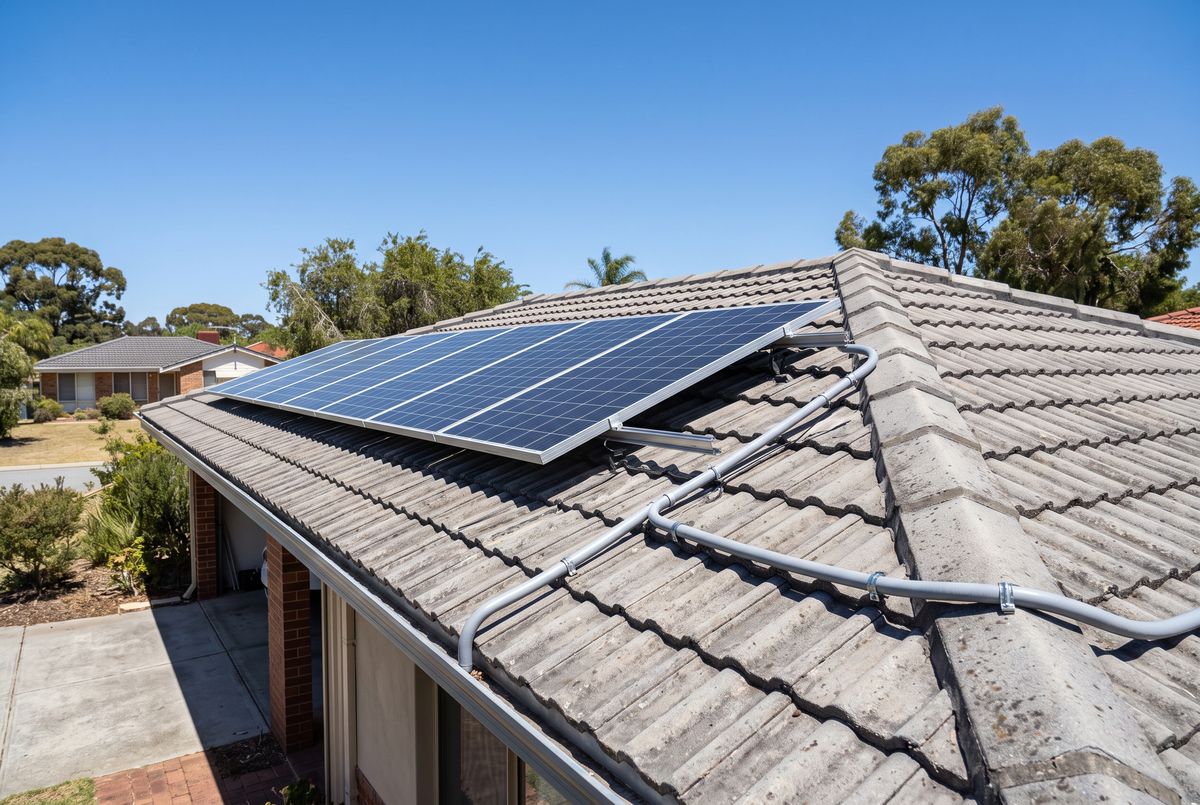
Rooftop solar is common on Perth homes, and it changes how roof work is done. Panels cover part of the roof, the brackets and cables pass through or under the covering, and the system stays electrically live in daylight. A roofer can repair the roof, but the solar system itself is electrical equipment that needs a licensed electrical worker.
This guide covers the roof problems that tend to appear around arrays, how removal and refitting usually work, and what to think about before solar goes onto an older roof.
What roof problems are common around solar panels?#
Most problems come from the installation itself or from the space under the panels. The common ones are:
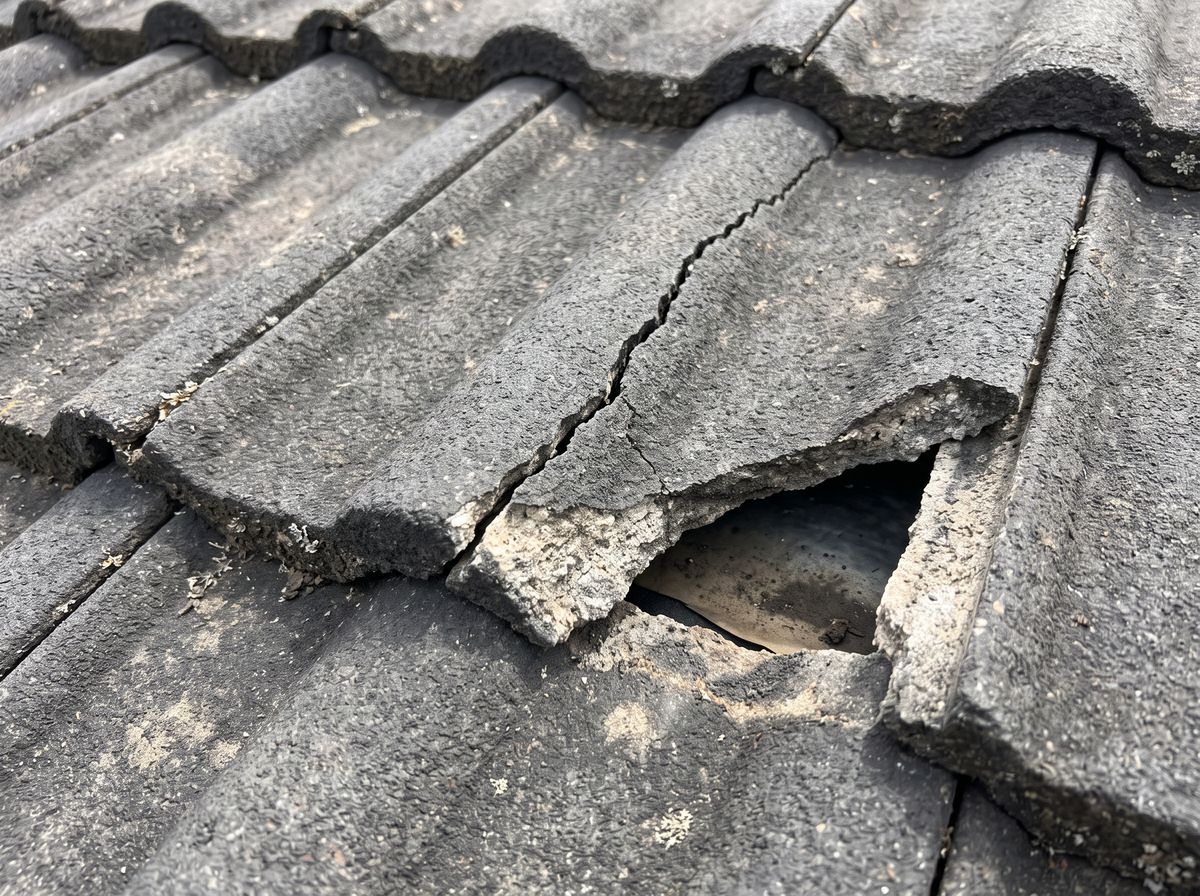
- Cracked or displaced tiles. Installing panels on a tile roof involves walking on the tiles and fitting mounting hooks beneath them, which can crack or lift tiles if not done carefully. Damage may not show until the next heavy rain. See tile roof repairs.
- Leaks at penetrations. Cable entries, conduit and bracket fixings pass through or under the roof covering. If they are poorly sealed or flashed, or the sealant degrades in the sun, water can follow them in. A flashing repair may be part of the fix.
- Corrosion at fixings on metal roofs. Brackets and fixings need to be compatible with the roofing. Manufacturers warn that some metals, such as copper and most stainless steel, are not compatible with zinc and aluminium coated steel.
- Debris trapped under the array. Leaves and dirt can collect behind panels, holding moisture and blocking water flow towards gutters.
- Birds nesting underneath. The sheltered gap under panels attracts pigeons and other birds, which bring nesting material and droppings.
How can you tell if a leak is linked to the solar installation?#
Look at timing and location. A leak that started soon after the installation, or a ceiling stain below the array or along the cable route to the inverter, suggests the installation is worth checking first. Record when the leak appears and what the weather was, and take photos of the ceiling.
Tell both the solar installer and a roofer what you have found. The installer may be responsible under their workmanship guarantee, while a roofer can assess whether the cause is a solar penetration or an unrelated problem. Our roof leak repair page explains how a leak inspection usually works.
Who should remove and refit solar panels?#
A licensed electrical contractor or an accredited solar installer, not a roofer working alone. Consumer Protection WA says solar installers must be licensed electrical contractors and that only licensed electricians may do the electrical work. Building and Energy advises leaving all solar system maintenance to electricians and installers.
The electrical risk is real even when the system is switched off. Building and Energy says the solar system should be shut down before anyone accesses the rooftop, gutters or panels, but warns that panels continue to generate voltage during daylight, so all wiring should be treated as live. DC isolators also need to be verified by a licensed electrician.
- Roof inspection and quote. The roofer identifies the problem and says whether panels need to come off.
- Shutdown and removal. A licensed electrical contractor or solar installer shuts the system down, disconnects and removes the panels, and stores them safely.
- Roof work. The roofer completes the repair, restoration or replacement under the array.
- Refit and testing. The electrical contractor reinstalls, reconnects and tests the system.
- Handover. Ask for any electrical safety paperwork the electrical contractor provides, and photos of the roof under the array.
Ask each contractor who will organise the electrician, whether removal and refitting are included in the price, and who is responsible if a panel is damaged during handling.
Can you clean or coat a roof around solar panels?#
Usually, but the quote should say exactly how. A restoration contractor may work around the panels, which leaves the roof under them uncleaned and uncoated, or arrange for the panels to be removed so the whole roof is treated. Each approach changes the price and the result.
Cleaning and coating also create overspray and runoff that should be kept off the panels. Ask how the panels will be protected, and whether the product or cleaning method could affect the panel glass or frames. Our roof restoration and roof cleaning pages explain what those quotes usually include. If the roof is asbestos cement, it must never be pressure cleaned.
How does roof work affect solar warranties?#
A solar system usually carries separate warranties for the panels, the inverter and the installer’s workmanship. Consumer Protection WA notes that panels generally have a long performance warranty, with shorter material warranties and workmanship guarantees, and that installers must use an acceptable level of care and skill.
Before roof work starts, ask the original installer whether removal and refitting by another electrical contractor would affect the workmanship guarantee. Keep the system documents together with your roofing paperwork, so later claims are easier.
Should you fix the roof before installing solar?#
Yes, if the roof needs work. Consumer Protection WA lists site preparation, including the condition of the roof, as a possible extra cost for a solar installation. If the roof is likely to need restoration or replacement in the next few years, doing it first can avoid paying to remove and refit the panels later.
Ask a roofer to check the area where panels will sit, including tiles, ridge capping, flashings and fixings. An asbestos cement roof is a different case: fixing panels would mean drilling or otherwise disturbing the sheeting, which should not be done, and WA Health’s position is to encourage early, safe removal of these roofs. See asbestos roof replacement before planning solar on one.
What can you do about birds under solar panels?#
Bird-proofing usually means fitting mesh or a similar barrier around the edge of the array so birds cannot get underneath. Existing nests and droppings may need to be cleared first, and gutters below the array often need cleaning too.
Because the barrier attaches to or near the panels, ask whether it is compatible with your panel frames and whether fitting it affects the panel or installation warranty. The installer or a licensed electrical contractor may need to be involved if panels have to be lifted. Our gutter repairs page covers blocked gutters and downpipes.
Frequently asked questions
Can a roofer remove my solar panels?
Not on their own. The electrical work, including disconnecting and reconnecting the system, must be done by a licensed electrician, and Consumer Protection WA says solar installers must be licensed electrical contractors. Some roofers arrange this as part of the job, so ask who will do it and check their licence.
Will solar panels make my roof leak?
Not necessarily. A well-installed system should not leak, but cable entries, conduit and bracket fixings are common leak points if they are poorly sealed or flashed, and tiles can crack during installation.
Do I need to replace my roof before installing solar?
Not always, but it is worth checking the roof’s condition first. If restoration or replacement is likely soon, doing that work before the panels go on avoids paying to remove and refit them later.
Is it safe to clean my solar panels myself?
Building and Energy advises leaving solar system maintenance to electricians and installers, and says the system should be shut down before anyone accesses the rooftop or panels. Cleaning panels from the roof also means working at height, which is best left to professionals.
How do I stop pigeons nesting under solar panels?
Bird-proofing mesh fitted around the edge of the array is the usual approach, after any nests and droppings are cleared. Ask whether the product suits your panel frames and whether fitting it affects your warranties.