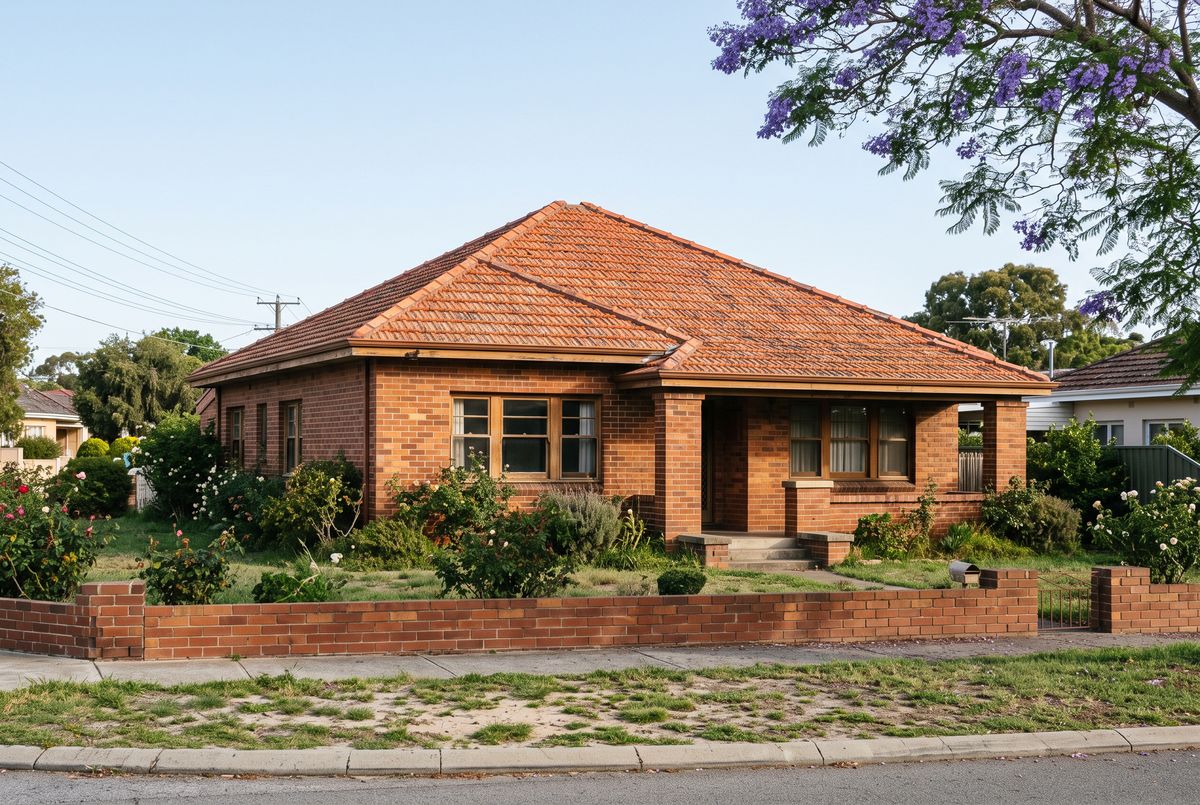
Concrete and terracotta tiles can look alike from the footpath, especially once both are dusty or covered in lichen. They behave differently, though, and the difference decides whether a roof can be coated, how it should be cleaned and how easy it will be to find a matching tile after a breakage.
Both are common on Perth homes. Concrete tiles are widespread across the suburbs, and terracotta appears on many older houses as well as some newer ones.
How can you tell concrete and terracotta tiles apart?#
The quickest clues are surface texture, colour and, if you can see one, a broken edge. Use the table as a guide, looking from the ground, an upstairs window or a spare tile in the shed.
| Clue | Concrete tile | Terracotta tile |
|---|---|---|
| Material | Sand, cement and pigment, moulded | Clay, shaped and fired in a kiln |
| Surface | Smooth when new; sandy and grainy once weathered | Smooth, fired surface; glazed tiles are glossy |
| Colour | Greys, charcoals, reds and browns that fade and go patchy with age | Natural oranges, reds and browns, often with variation from tile to tile |
| Broken edge | Grey cement core with visible sand grains | Clay colour runs through the body |
| Underside, seen from the roof space | Rough, grey, cement texture | Orange or red-brown fired clay |
| Coating | Commonly coated after cleaning and preparation | Unglazed can be coated with a compatible product; glazed is not normally painted |
If you cannot tell, a contractor can usually identify the tile from a couple of clear photos. Some manufacturers mark their name on the underside of the tile, which also helps when finding replacements.
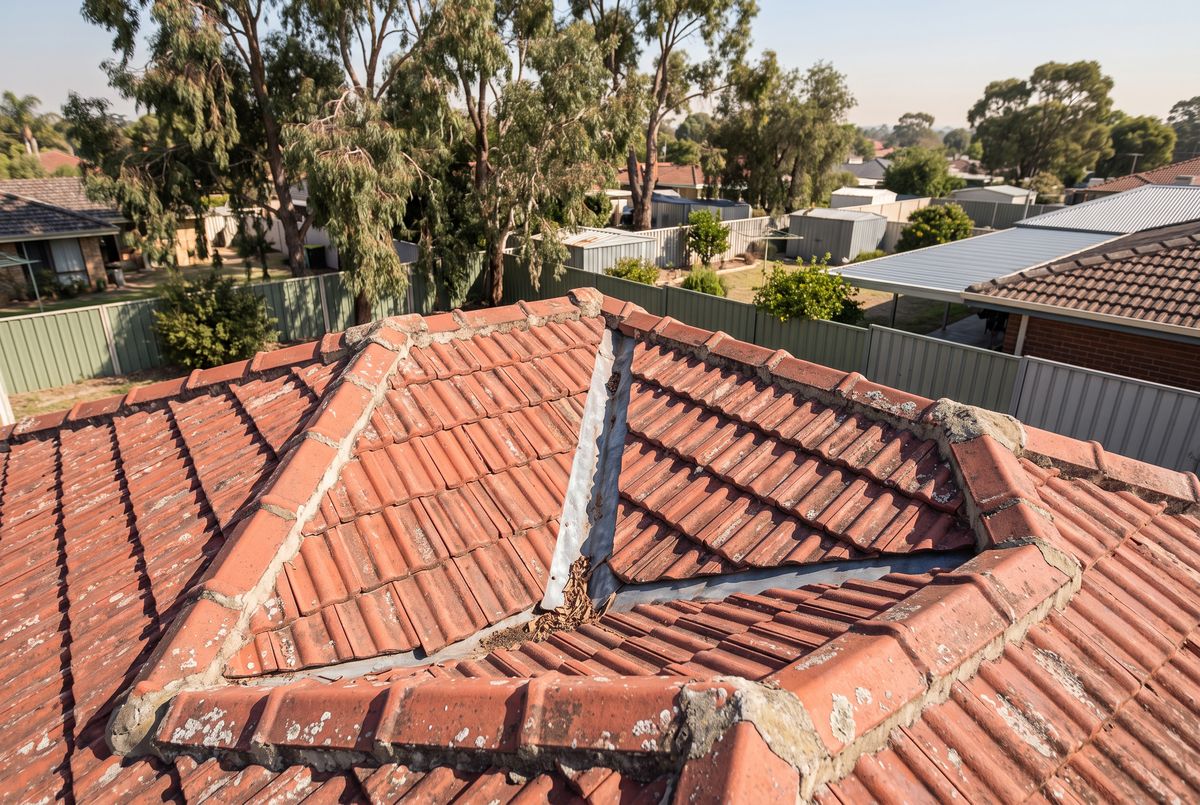
How does each material weather?#
The two age in different ways, and knowing which pattern you are looking at helps you judge whether the roof needs cleaning, coating or replacement.
Concrete tiles
A concrete tile’s colour sits mostly in its surface finish. Years of strong sun and rain wear that finish away, exposing the sand underneath. The tile becomes duller, rougher and more porous, so it holds dirt and moisture longer and lichen grows readily. Heavily weathered tiles can also wear at the edges and the interlocking ribs. The tile may still keep water out well, but the surface tells you it has lost its protective layer.
Unglazed terracotta
Fired clay keeps much of its colour, so an unglazed terracotta roof tends to darken and mellow rather than fade. It is still porous, and shaded slopes often carry lichen or moss. Older terracotta can become brittle, so tiles may crack or chip when walked on or struck.
Glazed terracotta
The glaze sheds water and dirt, so glazed tiles usually stay cleaner and brighter. The glaze does not stop cracking from impact or foot traffic, and chips in the glaze expose the clay beneath.
In every case, lichen and moss are signs of moisture and shade rather than damage in themselves; see lichen and moss on roofs.
Can concrete and terracotta tiles be painted or coated?#
Concrete tiles and unglazed terracotta can be coated if the product is compatible and the surface is properly prepared, while glazed terracotta is not normally painted.
Concrete is the most commonly coated tile. Once the original finish has worn, a restoration usually involves cleaning, repairs and a primer or sealer before topcoats, so the coating has a sound surface to bond to. Unglazed terracotta needs a coating suited to clay. Many owners decide not to coat it at all, because the natural colour is part of the appeal and the clay does not fade in the same way. Glazed terracotta is usually cleaned and repaired instead, because the glaze is already the finished, weatherproof surface.
Whatever the tile, a coating does not fix cracked tiles, slipped tiles or failing ridges by itself. Those repairs come first. See roof painting for questions to ask about products and roof restoration for the wider package.
How hard is it to match a replacement tile?#
It depends on the material and how old the roof is. A replacement must fit the profile and interlock with its neighbours, so size and shape matter more than colour.
- Concrete tiles come in many profiles, and some older ones are no longer made. Even when the profile is available, a new tile will look brighter than weathered tiles around it until the roof is cleaned or coated.
- Terracotta tiles vary by maker and era too. A new tile can look noticeably different from aged clay, and glazed colours can be hard to match exactly.
- Second-hand tiles salvaged from other roofs are a common way to match older profiles and weathering.
- Moving tiles around is another option: a contractor can take matching tiles from a less visible area, such as the back of the house, and put the closest new match there.
If there are leftover tiles in the shed or garage, hang on to them and mention them to anyone quoting. Our guide to cracked and broken roof tiles covers the replacement process itself.
Is ridge work different on concrete and terracotta roofs?#
The method is broadly the same: ridge and hip caps sit on a bed of sand-and-cement mortar, and pointing seals over the bedding. Repointing renews that top layer, while rebedding removes the caps, resets them in fresh mortar and then points them. See roof repointing for which you may need.
The details differ. Terracotta roofs normally have terracotta ridge caps, and concrete roofs concrete caps, so replacements should match the roof. On an uncoated roof, the colour of the pointing matters to the finished look. Older terracotta caps can be brittle, so lifting them for rebedding needs care, and a few may break and need matching replacements.
Which type breaks more easily?#
Neither is immune. Both crack under poorly placed foot traffic, falling branches and hail, and both can be damaged by tradespeople installing solar panels, antennas or air conditioners.
Age and condition matter more than the material. Old, brittle terracotta and heavily weathered concrete are both more vulnerable than newer tiles of the same kind. If breakage is widespread across the roof, ask for an assessment of whether tile roof repairs are still the right approach, or whether a restoration or replacement makes more sense.
What should you tell a contractor about your tiles?#
The more a contractor knows about the tiles, the better the first quote will be. Include what you can:
- Whether you think the tiles are concrete or terracotta, and glazed or unglazed.
- Whether the roof has been coated before, and roughly when, if you know.
- Any spare tiles you have, with a photo of one, including the underside.
- Photos of the roof from the ground, including the ridges.
- Where you have seen broken, slipped or missing tiles.
- Any leaks, stains or other trades who have recently worked on the roof.
If you are unsure what the roof is made of at all, start with our guide to Perth roof types.
Frequently asked questions
Are terracotta tiles better than concrete tiles?
Neither is better for every home. Terracotta tends to hold its colour and glazed terracotta stays cleaner, while concrete tiles are widely used and commonly restored with a coating once their finish wears. Condition, matching and maintenance matter more than the material.
Why do my concrete roof tiles look faded and sandy?
The coloured surface finish on concrete tiles wears away with sun and weather, exposing the sand and cement beneath. The tiles become more porous and lichen grows more easily, which is often when owners consider cleaning and coating.
Can concrete and terracotta tiles be mixed on one roof?
Not normally. A replacement tile has to interlock with the tiles around it and match their profile and size, so contractors replace like with like. Mixed materials would also look patchy and weather differently.
Do glazed terracotta tiles need maintenance?
Yes. The glaze keeps the surface cleaner, but ridge capping, pointing, valleys, flashings and broken tiles still need checking. Glazed tiles are normally cleaned and repaired rather than painted.
How do I find out the profile of my roof tiles?
A contractor can usually identify it from clear photos or a spare tile. Some tiles have the manufacturer’s name on the underside, and original building plans sometimes name the tile.