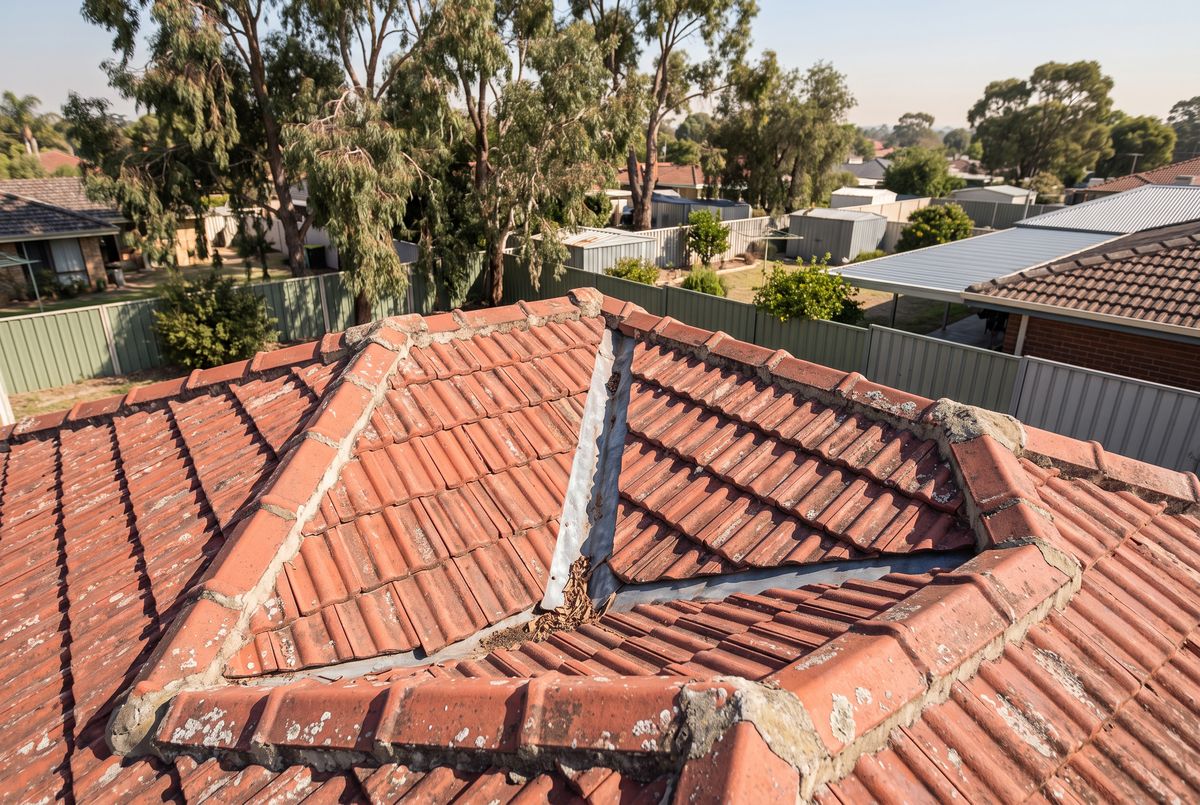
Your roof material decides almost everything that follows: which repairs make sense, whether the roof can be cleaned or coated, how replacement parts are matched and which safety rules apply. It is usually the first question a roofing contractor asks, and “not sure” is a perfectly good answer to start with.
You do not need a ladder to work it out. A look from the street or a spare tile in the shed will usually narrow it down.
What types of roofs are common in Perth?#
Perth homes mostly have one of three roof coverings: concrete tiles, terracotta tiles or pre-painted steel. Older houses add unpainted steel, galvanised “iron” and asbestos cement sheeting, and a few have slate. The table is a quick guide.
| Roof type | What you usually see from the ground | Common problems | What it typically needs |
|---|---|---|---|
| Concrete tile | Thick, profiled tiles with a matt surface that fades and turns grainy | Porous surface, lichen, cracked ridge pointing | Ridge work, tile replacement, cleaning; can be coated |
| Unglazed terracotta | Fired clay tiles in orange, red or brown, with natural colour variation | Lichen and moss, cracked or brittle tiles, ridge pointing | Repairs and ridge work; can be coated with a compatible product |
| Glazed terracotta | Clay tiles with a glossy, ceramic surface that reflects light | Cracked tiles, ridge pointing | Repairs and ridge work; not normally painted |
| Pre-painted steel | Long coloured sheets from ridge to gutter, with lines of screws | Chalky paint, loose screws, flashing faults, coastal corrosion | Fixing and flashing checks; repainting where suitable |
| Unpainted steel (ZINCALUME type) | Silver-grey metallic sheets that dull over time | Corrosion at cut edges, laps or where incompatible metals meet | Fixing checks, compatible repair materials |
| Older galvanised steel | Dull grey sheets, often shorter lengths with overlaps, rust spots | Rust, loose fixings, leaking laps | Rust treatment or sheet replacement |
| Asbestos cement | Grey sheeting with wide, deep corrugations, often heavily covered in lichen | Weathering, cracking, lichen growth | No pressure cleaning or walking on it; testing and licensed removal advice |
| Slate | Thin, flat, dark grey or blue-grey stone pieces laid in overlapping rows | Slipped or cracked slates | A specialist slater |
How can you tell what your roof is made of without climbing up?#
You can usually identify a roof from the ground, from inside the house or from paperwork, so there is never a reason to get onto it.
- Look from across the street, or from an upstairs window, in good daylight.
- Zoom in with your phone camera; a photo often shows texture you cannot see by eye.
- Check the garage, shed or under the house for spare tiles or offcuts of roof sheeting left by the builder.
- Look at old building plans, a building inspection report or the real estate listing.
- If a piece of tile has already fallen into the garden, look at the broken edge where it lies, unless you suspect asbestos.
The roof space shows the underside of tiles or sheets, but only look if there is a safe access hatch and somewhere solid to stand. Building and Energy WA advises switching the power off at the main switch before entering a roof space, using a torch and leaving wiring alone; cabling from solar panels stays live even when the main switch is off.
Do not climb onto the roof to check the material. Tiles crack underfoot, steel is slippery, and asbestos cement sheeting can break under a person’s weight. If you think the roof may be asbestos cement, do not touch, break or clean it.
Concrete tiles: what do they look like and need?#
Concrete tiles are made from sand and cement with a coloured surface finish, and they are common across the suburbs. With years of sun the finish wears, so older concrete tiles look faded, patchy and slightly sandy, and lichen takes hold more easily.
Most of the maintenance on a concrete tile roof happens at the ridges and hips, where the capping is bedded in mortar and finished with pointing, and in replacing the odd broken tile. See roof repointing for ridge work and tile roof repairs for broken tiles. Weathered concrete tiles can be cleaned and coated as part of a roof restoration if the tiles are still sound.
Terracotta tiles: glazed or unglazed?#
Terracotta tiles are fired clay. Unglazed terracotta has a matt, earthy surface in oranges, reds and browns, and the colour mostly comes from the clay itself, so it tends to hold its colour better than a concrete tile’s surface finish. Glazed terracotta has a glassy coating that looks shiny in sunlight and sheds dirt more easily.
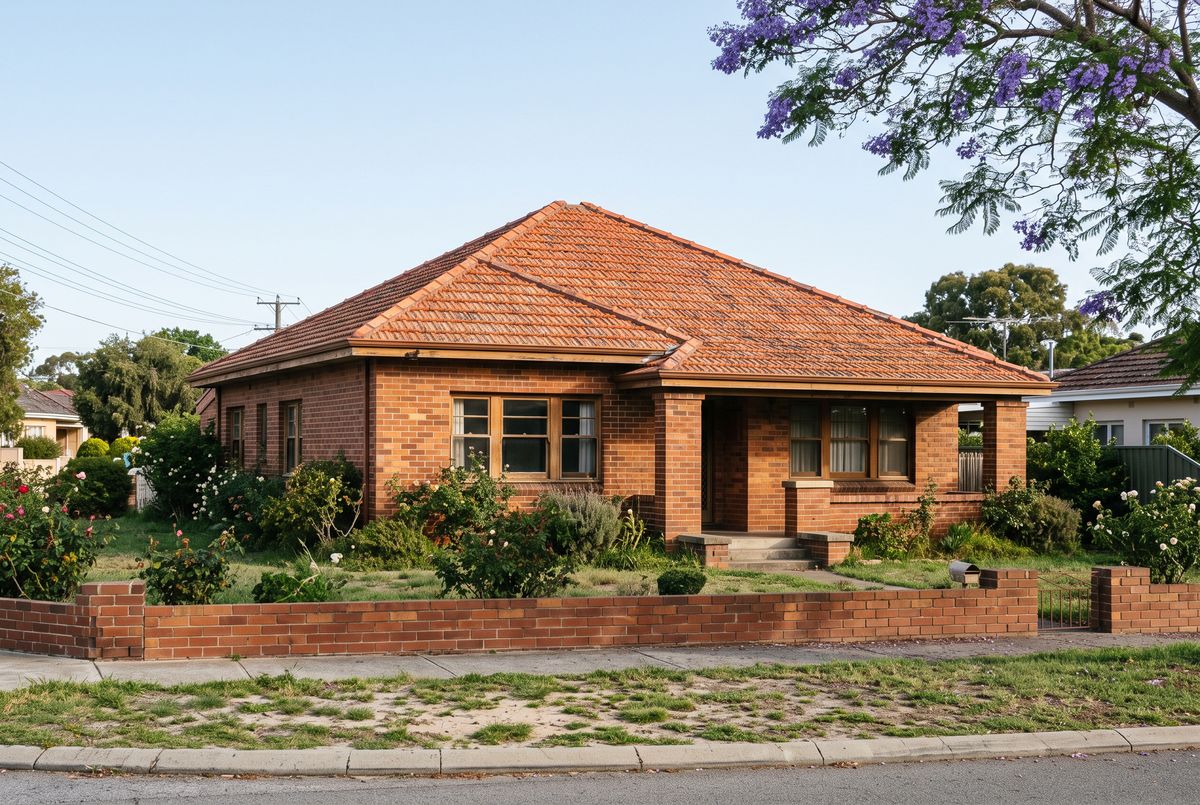
The difference matters when you get quotes. Glazed terracotta is not normally painted, so work on it usually means cleaning, replacing broken tiles and ridge repairs. Unglazed terracotta can be coated with a compatible product, although many owners keep the natural finish. Our guide to concrete vs terracotta tiles goes into the differences in detail.
Pre-painted steel: how do you recognise it?#
Pre-painted steel, such as COLORBOND steel, comes in long sheets that usually run in one piece from the ridge down to the gutter. From the ground you will see a corrugated or ribbed profile in a solid colour, straight lines of screw heads and folded metal capping along the ridge. The steel has a protective metallic coating under the paint.
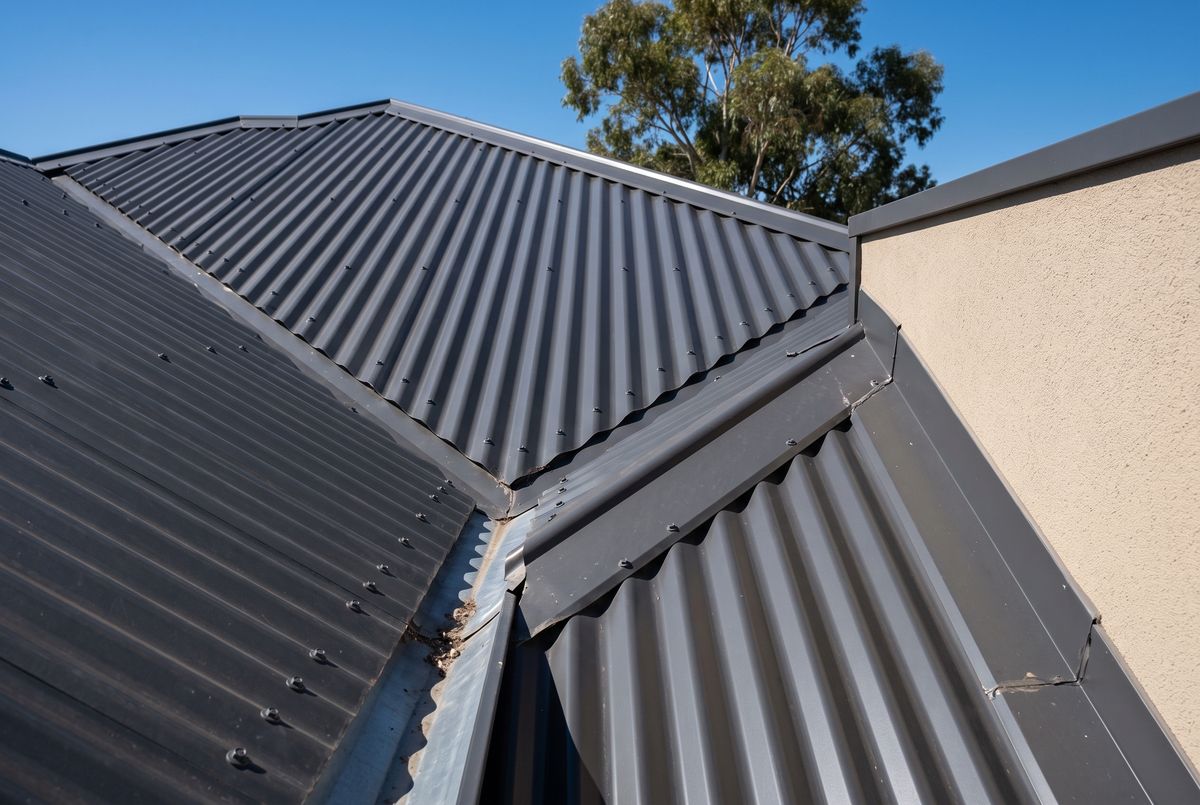
Steel roofs need their screws, flashings and sheet laps checked more than their surface; faded paint is mostly cosmetic until bare metal or rust shows. On the coast, salt air speeds up corrosion in sheltered spots the rain does not wash. See metal roof repairs and rusty roofs and gutters for what to ask about.
How is unpainted or galvanised steel different?#
Unpainted steel roofing looks metallic rather than coloured. Modern unpainted sheeting is usually ZINCALUME steel, which has an aluminium, zinc and magnesium alloy coating and weathers to a soft, dull silver. Older galvanised steel has a zinc coating and tends to look duller and greyer, often with rust spots, rust streaks below the screws or nails, and visible overlaps where shorter sheets were joined.
Many people call these roofs “tin” or “iron”. The Heritage Council of WA notes that corrugated iron sheeting is no longer made, and galvanised steel short sheets are an accepted replacement on heritage buildings. If your home is heritage listed, check with your local government before changing the material or profile.
How can you spot a possible asbestos cement roof?#
Asbestos cement roofing is usually grey sheeting with wide, deep corrugations and thick edges, and it often carries heavy dark lichen growth. WA Health notes that asbestos was used in many common products in homes built before 1990, so age is a clue, but looks alone cannot confirm it. Only testing by an appropriately qualified person can.
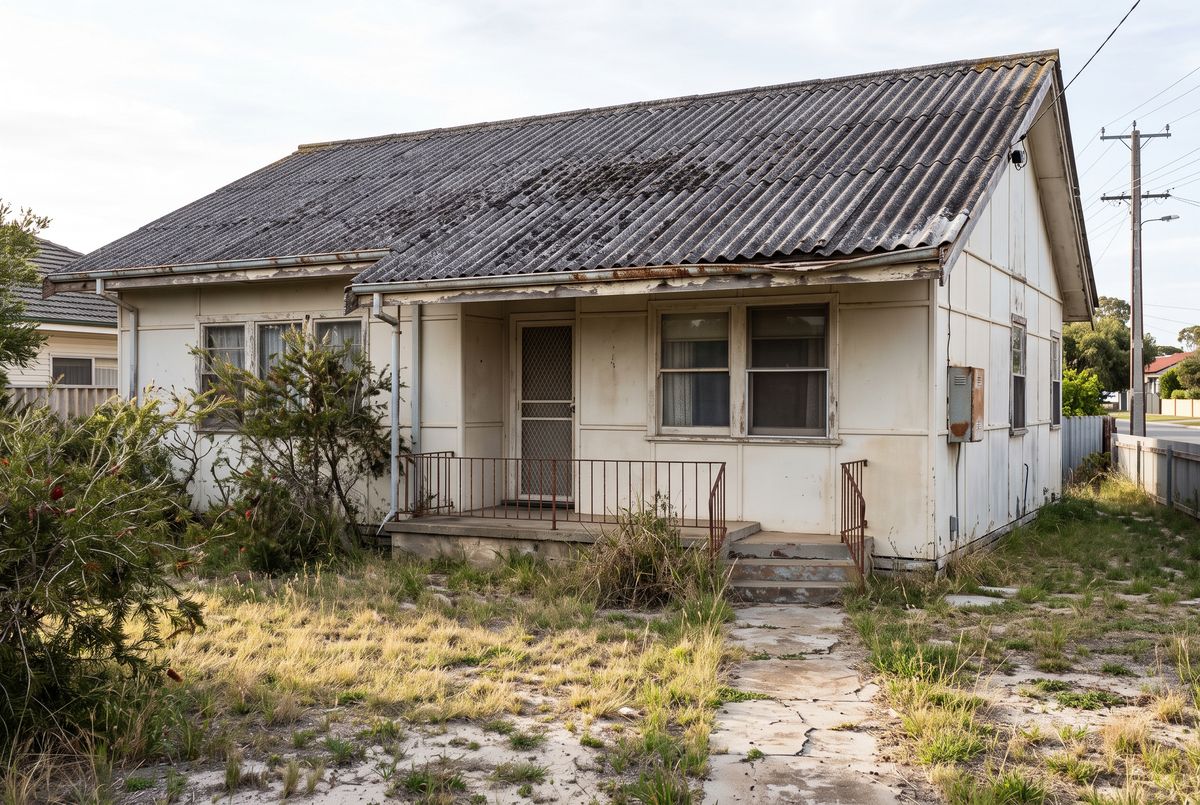
WA law bans pressure cleaning these roofs, and nobody should walk on, drill, cut or sand a suspected asbestos roof. If you think you have one, read our asbestos roofs guide and the page on asbestos roof replacement before asking for any quotes.
Are slate roofs found in Perth?#
Slate is rare on Perth homes. It is heavy natural stone split into thin, flat pieces, laid in overlapping rows and fixed individually. Repairs need a contractor with specific slate experience, so mention it clearly in any enquiry.
Why does the roof type matter when you ask for a quote?#
The material shapes the scope, the method and the price, so naming it early avoids unsuitable advice:
- Cleaning methods differ. Pressure cleaning suits many tile roofs but is banned on asbestos cement.
- Coatings differ. Concrete, unglazed terracotta and steel each need compatible products; glazed terracotta is not normally painted. See roof painting.
- Matching matters. Replacement tiles must match the profile, and replacement sheets the profile and colour.
If you are still unsure, describe what you can see and add photos to your quote request. Terms like ridge, hip, valley and flashing are explained in the roof glossary.
Frequently asked questions
Which roof types are most common in Perth?
Concrete tile, terracotta tile and pre-painted steel cover most Perth homes, with concrete tile widespread across the suburbs. Older homes can also have unpainted or galvanised steel or asbestos cement, and slate is rare.
How do I know whether my metal roof is painted or unpainted steel?
Painted steel has a solid colour such as grey, cream or green, while unpainted steel looks metallic silver or dull grey. A photo taken in daylight from the ground is usually enough for a contractor to tell, and a quote should name the exact product on the roof.
Can I tell if my roof is asbestos just by looking at it?
No. Grey sheeting with wide, deep corrugations on a home built before 1990 is a reason to be cautious, but only testing by a qualified person confirms asbestos. Treat it as asbestos until you know otherwise and do not disturb it.
What should I do if I do not know my roof type when asking for a quote?
Say you are not sure and include a few clear photos taken from the ground, plus the approximate age of the home. A contractor can usually identify the material from that and confirm it on site.
Does the roof type change which contractor I need?
Sometimes. Most roofers work on both tile and steel, but slate needs a specialist and asbestos cement removal must follow WA asbestos rules, including licensed removal above set limits.