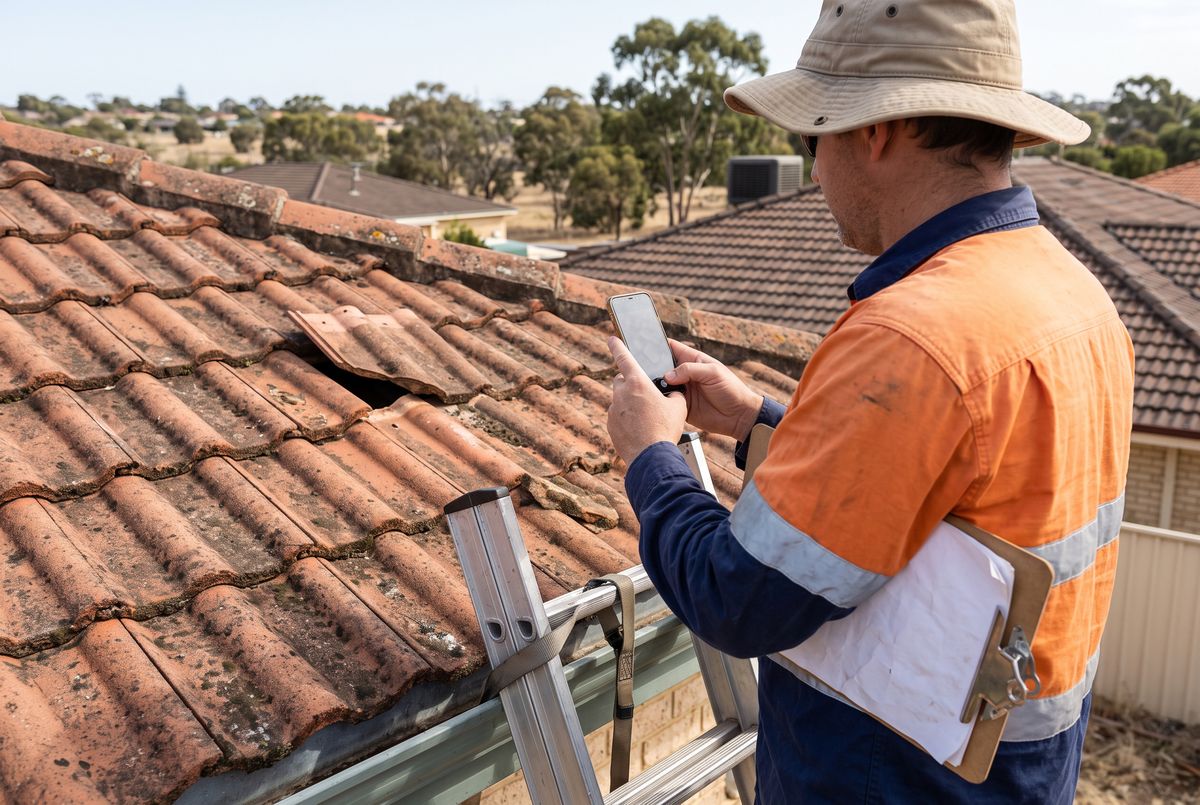
A building inspection report can make a sound roof sound alarming. Inspectors write for a wide audience and use standard phrases, and a list of ten roof items may contain two that matter now and eight that describe normal ageing. The useful step is to translate each item into a question a roofer can answer with a location, a photo and a price.
In WA, buyers can make a purchase conditional on a satisfactory building inspection. Consumer Protection WA suggests that where the condition refers to an inspection report, the contract should specify that the inspection complies with Australian Standard AS 4349.1-2007, the standard for pre-purchase inspections of residential buildings. Consumer Protection notes that buyers can engage an independent expert such as a building surveyor, registered builder, architect or structural engineer.
What do common roof comments in a building report mean?#
Most roof comments fall into a handful of standard phrases. This table explains what each usually means and what to ask a roofer to confirm. The meaning for a particular house always depends on what the roofer finds.
| Report wording | What it usually means | What to ask a roofer |
|---|---|---|
| Cracked or missing pointing to ridge capping | The finish over the mortar bedding under the ridge and hip caps has cracked or fallen away | Is the bedding underneath sound, so repointing is enough, or do the caps need rebedding? |
| Ridge caps loose or bedding deteriorated | The mortar holding the caps has broken down and caps can move | How many metres of ridge and hip need rebedding? |
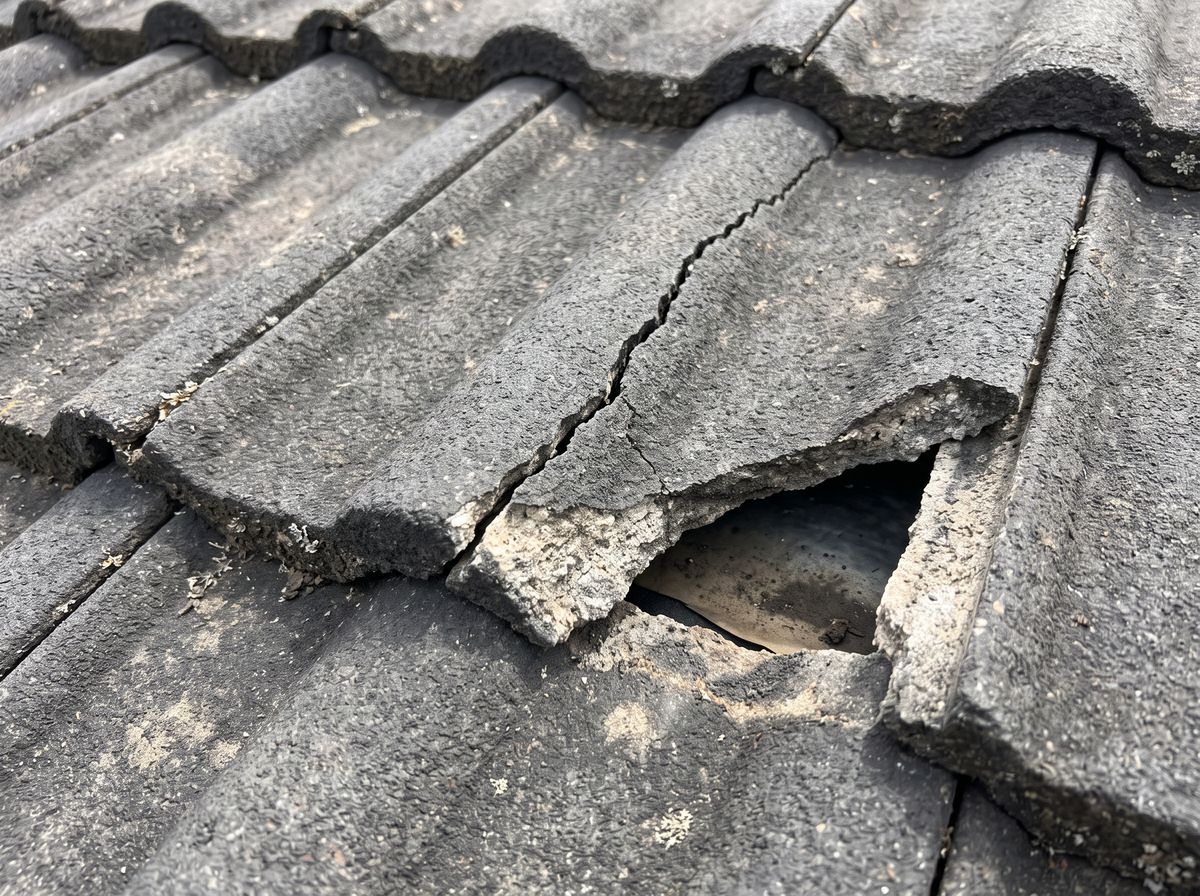
| Broken, cracked or slipped tiles | Individual tiles are damaged or out of position, which can let water in | How many tiles, where, and can they be matched? |
| Rust or corrosion to roof sheets, flashings or gutters | Steel components are corroding, from surface rust to holes | Is it surface rust that can be treated, or are parts perforated and due for replacement? |
| Inadequate fall in gutters, or ponding | Gutters are not sloping enough towards the downpipes, so water sits in them | Can the gutters be re-hung, or do they need replacing? |
| No sarking observed | There is no membrane under the tiles, which is common on older Perth tile roofs | Is anything else causing leaks? Is sarking worth considering if the roof is ever replaced? |
| Valley irons rusted or holding debris | The metal channels where two roof slopes meet are corroding or blocked | Do the valleys need cleaning, treating or replacing? |
| Flashing sealant failed or flashing lifted | The seal at a wall, chimney, vent or skylight junction is failing | Which flashings need resealing and which need replacing? |
| Roof space not accessible, or access limited | The inspector could not get into or fully see the roof space | Can you check the roof space as part of your inspection? |
| Roof covering viewed from ground or ladder only | The inspector did not walk the roof, often for safety reasons | Can you inspect the surface and photograph what you see? |
| Possible asbestos cement material | Sheeting that may contain asbestos, which only testing confirms | Has it been tested? What would removal and replacement involve? |
| Recommend further evaluation by a roofer | The inspector saw something outside their scope to diagnose | What exactly is the issue, and what will it cost to fix? |
For the trade work behind the most common items, see roof repointing, tile roof repairs and gutter repairs.
Why do reports recommend further evaluation?#
Because a building inspection is a visual check of the whole house, not a specialist roof diagnosis. The inspector reports what they can see from where they can safely stand, and states the limits of that access. A note recommending a roofer means the item needs someone who can get closer, work out the cause and price a fix.
Read the limitations section carefully. If the roof space was not accessible or the roof surface was only viewed from the ground, the report may not have seen problems that a roofer would.
How do you get a roofer’s scope and quote before settlement?#
Work backwards from the date in your inspection condition. Consumer Protection WA advises that a special condition should state what has to be done, by when, and what happens if it is not done in time, and suggests seeking expert advice on how conditions are drafted. Your settlement agent or lawyer can tell you exactly what your contract allows.
- Check your deadline. Find the date by which you must act under the inspection condition, and what notice it requires.
- Send the roof pages straight away. Give roofers the relevant pages of the report and any photos so they can see what was flagged.
- Arrange access through the agent. A roofer will usually need to visit the property, so ask the selling agent for an access time.
- Ask for written findings. Request photos, the cause of each issue and which items are urgent, which can be planned for and which are cosmetic.
- Get an itemised quote. Ask for each report item to be priced separately so you can see what matters most.
A pre-purchase roof inspection is one way to get this evidence quickly. If you get more than one quote, our guide to comparing roofing quotes helps you line them up.
How do you negotiate with roof evidence?#
Use the roofer’s written findings and itemised quote rather than the building report alone. A specific list, such as rebedding two hips, replacing a rusted valley iron and re-hanging a section of gutter, is easier for a seller to accept than a general claim that “the roof needs work”.
Separate the items that affect weather-tightness or safety from those that are cosmetic or normal ageing. Consumer Protection notes that you may be able to negotiate the price and conditions with the seller, and that the contract should say who pays for repairs. If the seller agrees to do the work before settlement, Consumer Protection suggests considering a second independent inspection before settlement to confirm it is done.
Should sellers fix roof items before listing?#
It can help. Sellers who expect a building inspection sometimes commission their own roof assessment first, fix the items that affect weather-tightness, and keep the invoices and photos to show buyers. That can reduce surprises during the buyer’s inspection period.
Be careful with cosmetic work. A coating applied over broken tiles, failed bedding or rusted-through sheets does not fix them, and a buyer’s inspector may still find them. If you are weighing a fuller job, our guide to repair, restoration or replacement explains the difference in scope.
Which roof items are usually more urgent?#
Items that let water in or could fall are usually the priority; appearance and gradual wear can often be planned. A roofer should classify each item for the specific roof, but a general way to sort them is:
- Usually higher priority: active leaks, loose or slipped tiles, displaced ridge caps, failed flashings, perforated valleys or sheets, and blocked or overflowing gutters.
- Usually plannable: cracked pointing on otherwise firm caps, surface rust, lichen, faded coatings and minor gutter sagging.
- Specialist questions: suspected asbestos cement, sagging roof lines or signs of structural movement, which may need someone qualified to test for asbestos or a structural engineer.
Our asbestos roof guide explains the extra rules that apply if the report flags possible asbestos.
Frequently asked questions
Does a building inspector walk on the roof?
Not always. Inspectors report what they can safely access and see, and the report should state how the roof was inspected and any limitations. If the roof was viewed only from the ground or a ladder, a roofer may find more.
Is no sarking a defect on an older Perth tile roof?
Not necessarily. Many older Perth tile roofs were built without sarking, so reports often note it as an observation. Adding it to an existing tile roof generally means lifting the tiles, so it is usually considered when the roof is replaced.
Can I ask the seller to fix roof defects before settlement?
You can ask, and the outcome depends on negotiation and your contract. If the seller agrees, record the agreed work in writing and consider a second independent inspection before settlement to confirm it has been done.
Who should check the roof items in my building report?
A roofing contractor can confirm causes, quantities and costs for most roof items. Suspected asbestos needs testing by an appropriately qualified person, and sagging or structural concerns may need a structural engineer.
Will a restoration clear every roof item in a building report?
Only if the scope deals with each item. A coating on its own does not fix broken tiles, failed bedding, rusted valleys or gutter falls, so ask for a quote that lists every report item and how it will be addressed.