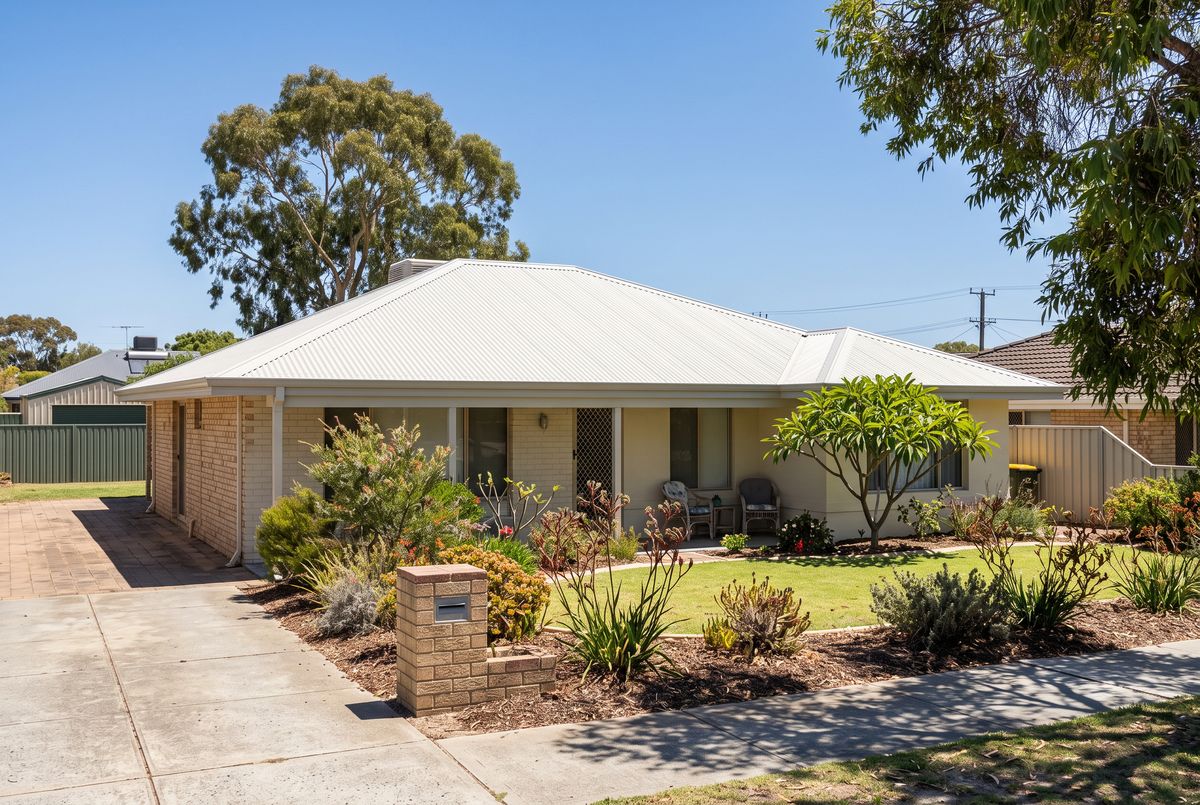
A roof colour is usually chosen when a roof is painted or replaced, and it stays for as long as the roof does. In a city with long, hot, sunny summers, that choice has a practical side as well as a look.
This guide explains the science in plain terms, what manufacturers publish, how colour works alongside insulation, and the rules and side effects worth checking. For the painting process itself, see roof painting.
Why do dark roofs get hotter than light roofs?#
Because they absorb more of the sunlight that lands on them. Sunlight carries energy, and a roof surface either reflects it or absorbs it as heat. Light surfaces reflect a larger share and absorb less; dark surfaces absorb more, so they reach a higher temperature on a sunny day. A hot roof then passes heat down into the roof space and, from there, towards the ceiling.
Visible colour is only part of the picture. Much of the sun’s energy arrives as infrared, which the eye cannot see, and pigments differ in how they handle it. Two colours that look alike can therefore absorb different amounts of heat, which is why manufacturers publish measured values rather than leaving it to the eye.
What is solar absorptance, and where do you find it?#
Solar absorptance is the share of incoming sunlight a roof surface absorbs, given as a number between 0 and 1. The Town of Victoria Park’s sustainability policy defines it as “the fraction of the total incident solar radiation that is absorbed by the roofing material, with the remainder being reflected”. The lower the number, the cooler the surface stays in the sun.
BlueScope publishes nominal values for each COLORBOND steel colour. In the Classic finish, for example, it lists Surfmist, a pale off-white, at 0.33 and Monument, a deep charcoal, at 0.73. It notes that these are nominal values for new product, measured to the ASTM E 903-96 test method, and that solar absorptance is a thermal property rather than a guide to appearance. Values can differ between finishes of the same colour, so check the figure for the exact product.
| What you may see | What it tells you | What to ask |
|---|---|---|
| Solar absorptance (SA) | The share of sunlight absorbed; lower is cooler | The value for the exact colour and finish you are choosing |
| Solar Reflectance Index (SRI) | A combined rating of how well the surface rejects solar heat; higher is cooler | Which test method and data it comes from |
| “Cool”, “thermal” or “heat-reflective” | A marketing description, not a measurement | The measured values behind the claim |
For concrete tiles and roof coatings, ask the tile or coating manufacturer for an equivalent figure. Building energy rules for new homes take roof solar absorptance into account, which is why designers and energy assessors often ask for it.
How much does roof colour change the temperature inside?#
It depends on what sits between the roof and the rooms. Colour changes how much heat enters the roof space. Ceiling insulation, sarking or an insulation blanket under the roof, and roof-space ventilation then decide how much of that heat reaches the living areas. That is why two houses with the same roof colour can feel very different on a hot afternoon.
The direction of the effect is well established. The Town of Victoria Park’s policy notes that houses with a low solar absorptance roof heat up less in summer and so need less air conditioning. How much difference it makes to a particular home is harder to predict, so treat precise savings figures with caution unless they come from testing or modelling of a similar house. For the layers under the roof, read roof sarking and insulation, and for how the two main roof materials compare, see tile vs metal roofs.
Does roof colour affect the roof itself?#
To some extent. A darker roof reaches higher surface temperatures, so it goes through a larger swing between day and night and puts more heat into sealants, pointing and anything mounted on it. That is rarely the deciding factor in choosing a colour, but it is one more reason good fixings and flexible sealants matter on a dark roof.
Can a light roof cause glare for neighbours?#
It can, in some situations. Very light or bright roofs, and unpainted metallic-coated steel in particular, reflect more sunlight, and neighbours who look down on the roof from a two-storey house or a slope may notice glare at certain times of day or year. Gloss level and the angle of the sun matter as well as colour.
If glare could be an issue, look at a large sample outdoors at different times of day, ask about lower-gloss finishes and talk to neighbours early. Some local governments have policies on reflective roofing, so check before choosing unpainted metal close to other homes.
Do councils or estates control roof colour?#
Some do, so check before you choose. Two examples from the Perth metropolitan area:
- Town of Bassendean. Its sustainability policy, adopted in 2022, introduced a presumption against dark roofs with a solar absorptance above 0.5 for relevant new development applications on residential land.
- Town of Victoria Park. Its sustainable development policy, adopted in 2025, offers a roof with a solar absorptance of 0.45 or less as one of the points-scoring options for new houses, and its streetscape policy generally expects roof colours to complement the street, or to match the existing building for additions.
Heritage areas, estate design guidelines, restrictive covenants on titles and strata by-laws can also restrict colours or materials. Policies change, so confirm the current position with your local government and check your title and any estate documents before committing. If you are replacing the roof, the guides to roof replacement and converting a tile roof to metal cover the other approvals to ask about.
Are heat-reflective roof coatings worth it?#
They can be, if the claims are backed by data. Many coatings are marketed as cool or heat-reflective, and some genuinely have low solar absorptance. Before you pay for one, ask:
- What is the solar absorptance or solar reflectance of the exact colour I am choosing?
- Which test method was used, and who carried out the test?
- Is the figure for new product, and is there any data after weathering?
- If the product claims a temperature reduction, was that measured on the roof surface, in the roof space or inside a home?
- Is the coating compatible with my tiles or steel, and what does its warranty require?
A coating does not repair broken tiles, failed ridges or rusted sheets, so those need fixing first whatever the colour.
Frequently asked questions
What are the downsides of a very light roof?
A very light roof can cause glare for neighbours who look down on it, may show dirt and staining more readily, and may not suit local streetscape or heritage rules. Its cooling benefit also depends on the insulation and ventilation below, so it is not a substitute for those.
Will my council let me have a black roof?
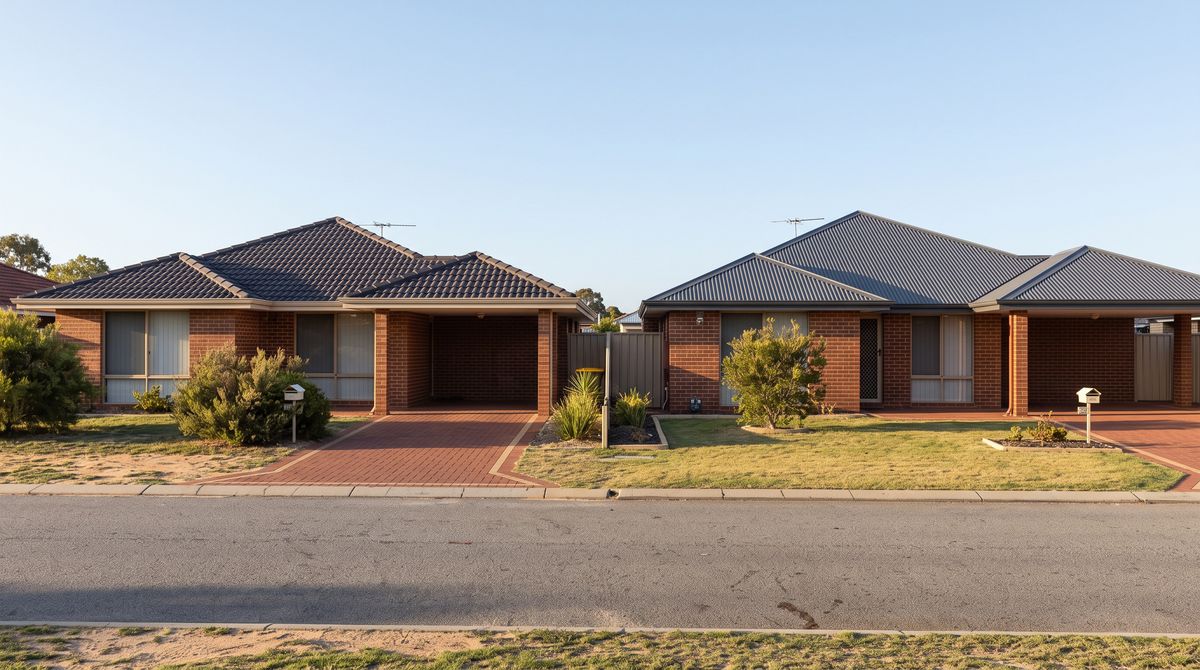
It depends on where you live. Some Perth local governments discourage or restrict dark roofs in new development through sustainability or streetscape policies, and estates and heritage areas may have their own rules. Ask your local government and check your title documents before choosing a very dark colour.
Why do two similar-looking colours have different heat ratings?
Much of the sun’s energy is infrared, which the eye cannot see, and different pigments and finishes reflect it differently. That is why manufacturers publish a measured solar absorptance for each colour and finish, and why it is worth comparing those numbers rather than the colour chart.
Does a light roof stay cool as it ages?
Published solar absorptance figures are nominal values for new product, and dirt, weathering and fading can change how a surface performs over time. Rain washing, clear gutters and a sound coating help. If long-term performance matters to you, ask the manufacturer whether it has data for weathered surfaces.
Where can I find the solar absorptance of my roof colour?
Roofing and coating manufacturers usually list it on their colour pages or product data sheets. For an existing roof, find the colour name from invoices, plans or a previous contractor, then look up that product. For concrete tiles or a roof coating, ask the tile or coating manufacturer.
Sources
- COLORBOND steel (BlueScope): Surfmist colour and thermal values
- COLORBOND steel (BlueScope): Monument colour and thermal values
- BlueScope (SteelSelect): solar absorptance and building code classification
- Town of Bassendean: council adopts new sustainability policy
- Town of Victoria Park: Local Planning Policy 46, Sustainable Development